Discover the ultimate North Lake Garda itinerary, including top photography spots in Riva del Garda, Limone sul Garda, and Malcesine, local food, and practical travel tips.
Jagged limestone peaks, emerald valleys, and dramatic alpine meadows define the Dolomites, a UNESCO World Heritage region in northeastern Italy. Renowned for their pale, vertical cliffs and spectacular light at sunrise and sunset, the range offers year-round adventure: world-class climbing and via ferrata in summer, and exceptional skiing and snowshoeing in winter. Charming mountain villages, traditional Ladin culture, and hearty local cuisine complete the experience, making the Dolomites a striking blend of natural grandeur and alpine tradition.
Cortina d’Ampezzo offers elegant, high-altitude scenery with dramatic Dolomite peaks, chic cafés, and well-marked hiking and climbing routes—ideal for panoramic walks, via ferrata, and relaxed mountain culture. Val Gardena / Ortisei is more activity-focused, with extensive trail networks for hikers and mountain bikers, strong Ladin culture, and easier access to the Sella Ronda for long day tours. Choose Cortina for scenic sophistication and shorter, scenic excursions; choose Val Gardena for outdoor adventure, family-friendly trails, and a denser network of mountain-sport options.
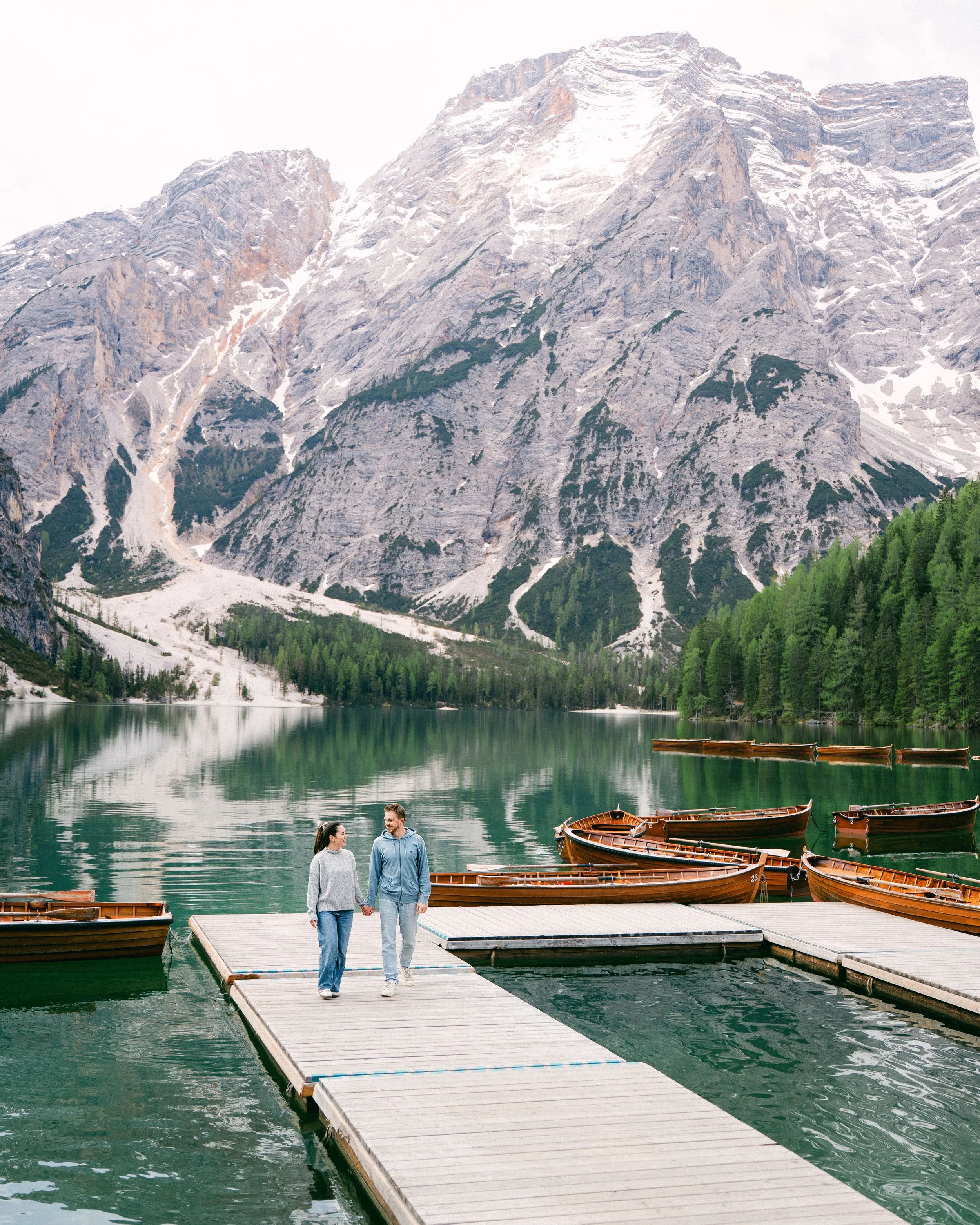
May at Lago di Braies
When I first moved to northern Italy, I had no idea just how vast the Dolomites were. Sometimes it can take up to three hours to get from one side to the other, which is why it’s so important to choose where you stay carefully! When planning your trip, I recommend planning your days around visiting spots around Cortina and then places on the Ortisei side. In this guide I’ll share the most iconic locations in the Dolomites in relation to the Cortina d’Ampezzo side versus the Val Gardena / Ortisei area.
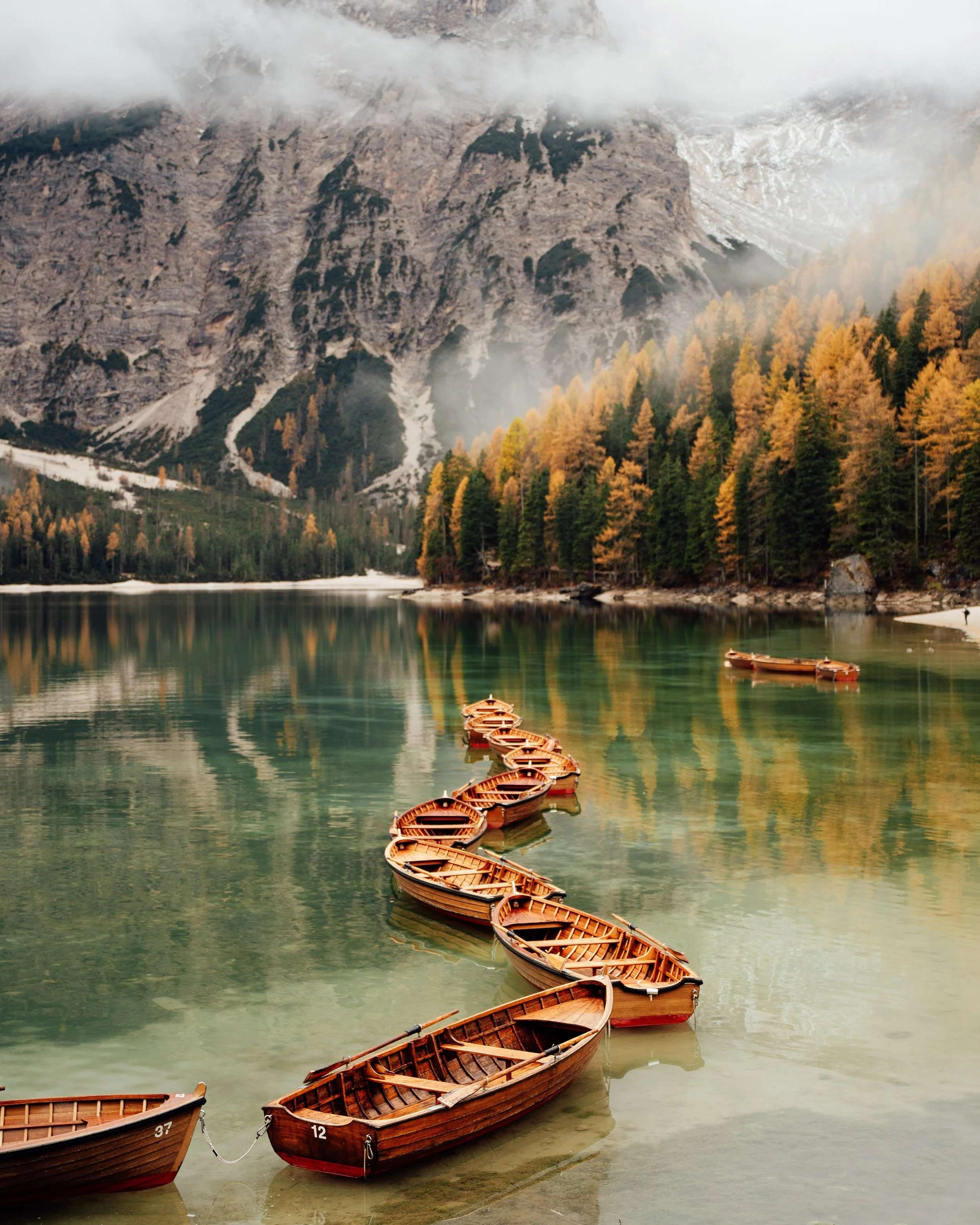
October at Lago di Braies
Lago di Braies is probably the most iconic destination in all of the Dolomites, so if you’re headed here it’s about one hour from Cortina. There are places to stay closer to Lago di Braies, of course, but this guide is to help generalize where to stay so you’re not moving hotels every night or booking someplace on the Ortisei side. I recommend visiting this lake close to sunrise to avoid the most people.
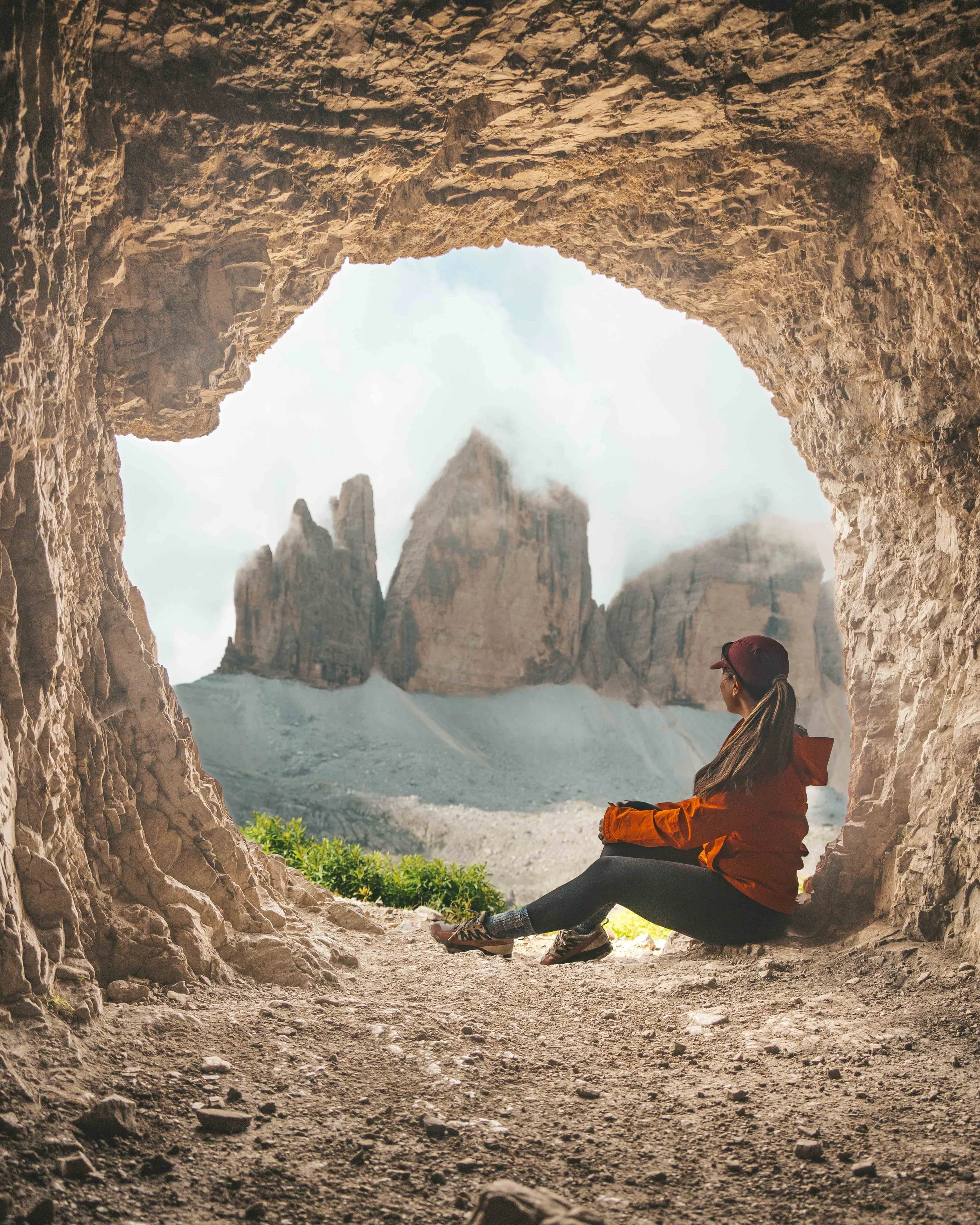
One of the top hikes close to Cortina d’Ampezzo is Tre Cime di Lavaredo. As of 2025 you need to purchase a pass for the toll roads online in advance, so make sure you select a time slot that fits your schedule. This hike takes about 4 hours, not including if you add on Cadini di Misurina. You’ll start the hike at Rifugio Auronzo (put that into your GPS when navigating here), which is about a 45 minute drive from Cortina d’Ampezzo.
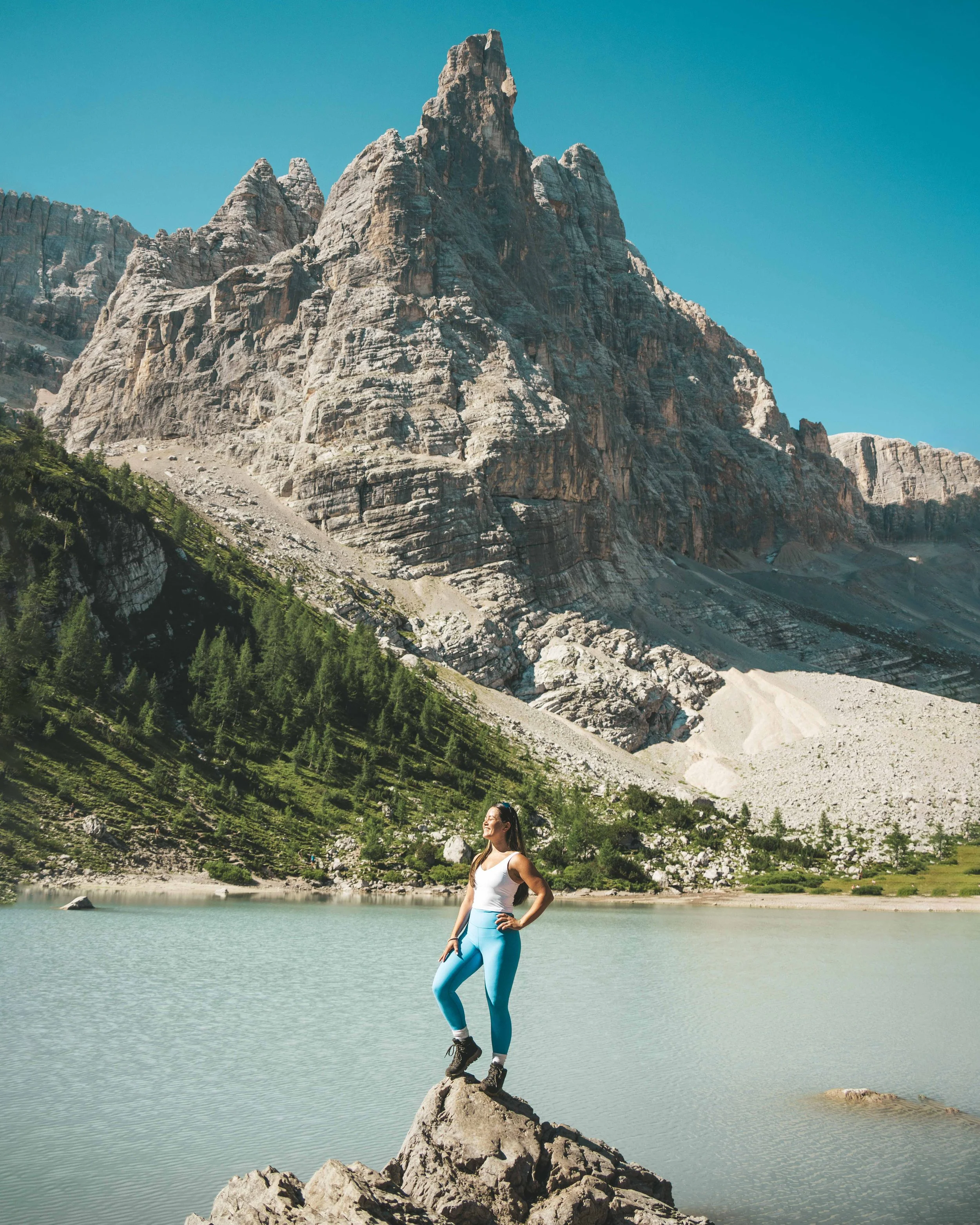
Known for its stunning iridescent blue waters, Lago di Sorapis is another popular hike and is only about 20 minutes from Cortina d’Ampezzo. There are two ways to get to the lake from the parking lot: an easy way and a hard way. I was training for Mt. Blanc so I took the hard way, and it was challenging! So make sure you check which trail you’re taking beforehand.
Now that we’ve established the most popular locations and hikes near Cortina d’Ampezzo, let’s talk about hotels! These are some of the most popular ones you’ll see on Instagram and social media:
Hotel Hubertus is about one hour from Cortina d’Ampezzo and only 30 minutes from Lago di Braies, making it the perfect location if you’re looking for something in that area!
Padova (Padua) is a compact, lively city in northeastern Italy known for its rich history, striking medieval and Renaissance architecture, and vibrant student life. Highlights include the Scrovegni Chapel with Giotto’s groundbreaking frescoes, the ornate Basilica of Saint Anthony, and the atmospheric Prato della Valle — one of Europe’s largest squares. Narrow cobbled streets hide lively cafés, trattorie, and markets, while the city’s university, one of the world’s oldest, keeps the cultural scene youthful and intellectual. Easily explored on foot or by bike, Padova offers a rewarding mix of art, history, and everyday Italian charm.
I moved to Padova about a year and a half ago and wanted to put together a little guide of everything I do when friends come to visit. Most people skip Padova due to the proximity of Venice, but if you’ve found that you booked too many days in Venice but don’t have enough time to go to the Dolomites, I recommend hopping on a train and spending the day in this beautiful city.
If you’re looking to stay a night in Padova rather than just a day trip, it’s actually much cheaper than Venice! For my budget-friendly friends, there’s a brand new hostel that just opened up in the heart of downtown Padova, Hotello Padova.
STAY | Alternatively, check out Hostelworld.com for more options in the area.
Caffè Pedrocchi in Padua is an iconic 19th-century coffeehouse known for its elegant neoclassical façade, historic interiors, and cultural significance as a meeting place for intellectuals and students. Opened in 1831, it blends café, pasticceria, and museum elements, offering traditional Italian coffee, pastries, and a glimpse into Padua’s social and political history. Its distinctive "green room" remains a symbol of literary and academic gatherings, making Caffè Pedrocchi a must-visit for anyone exploring the city.
Start your morning visiting Caffe Pedrocchi and grabbing the iconic mint cappuccino (cafe di Pedrocchi) and a slice of mint cake. You won’t find this anywhere else!
Founded in 1222, the University of Padova is one of the world’s oldest and most prestigious universities, renowned for its long tradition of academic freedom and interdisciplinary scholarship. It became a center of scientific innovation in the Renaissance, attracting scholars and promoting empirical inquiry. The university’s most famous association is with Galileo Galilei, who lectured there from 1592 to 1610. While at Padova, Galileo made pivotal advances in physics, astronomy, and the study of motion, including improvements to the telescope and observations that challenged prevailing Aristotelian views. His work at Padova helped lay the foundations of modern science and cemented the city’s place in intellectual history.
After having an Italian breakfast at Caffe Pedrocchi, head over for a tour at University of Padova, the second oldest university in the world, to see where Galileo taught. If you want to skip the tour, you can check out the historic Palazzo del Bo courtyard, for free.
I also recommend checking out Giotto’s Scrovegni Chapel, a masterpiece of early Renaissance art. Built and frescoed around 1305, the chapel’s luminous cycle depicts the life of the Virgin and Christ with emotional clarity, dramatic composition, and pioneering use of naturalism. Giotto’s bold figures, expressive faces, and skillful use of space mark a decisive shift from medieval styles, making the chapel a cornerstone in the development of Western painting. The intimate, richly colored interiors remain one of Italy’s most important and moving artistic experiences.
TOUR | Alternatively, check out Getyourguide.com for more tour options in the area.
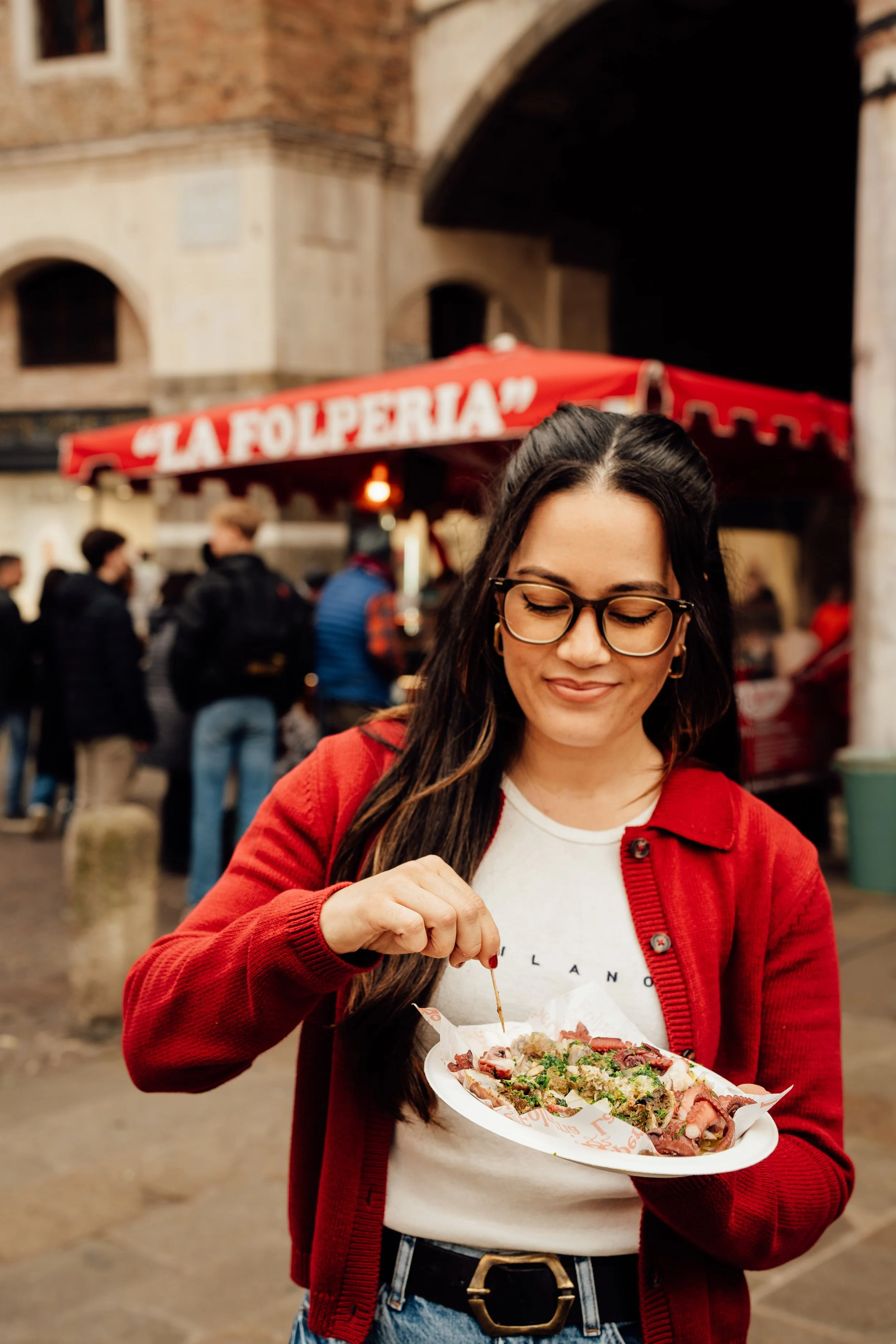
After your tour, head over to Piazza della Erbe and Piazza del Frutti to browse the local markets. In Piazza della Erbe you’ll see a little stand called a “folperia,” which in Venetian dialect translates to “octopus stand.” Polpo means octopus in Italian, and folpo is octopus in Venetian dialect. Seafood is always a must since we’re so close to the Adriatic Sea and this stand is very popular!
The Basilica di Sant’Antonio in Padua is a major Roman Catholic pilgrimage site built in the 13th century to honor Saint Anthony of Padua. A striking mix of Romanesque, Byzantine and Gothic styles, the basilica houses richly decorated chapels, the saint’s silver-reliquary tomb, and notable artworks by Donatello and other Renaissance artists. Its domes and rose-colored stone dominate Padua’s skyline, while its religious and cultural significance draws visitors year-round for worship, art, and history.
After visiting the piazza, you can either walk or hop on a tram towards Prato della Valle. The Basilica is a must in Padova, as it is the second most popular Catholic pilgrimage site after the Vatican. Saint Anthony’s physical tongue is also on display, but you can read more about that when you visit.
Prato della Valle in Padua is one of Europe’s largest public squares, shaped as an elliptical island surrounded by a wide canal and lined with 78 statues of notable figures. Once a swampy area, it was transformed in the 18th century into a landscaped promenade and market space. Today it remains a popular spot for locals and visitors, hosting events, markets, and leisurely strolls amid historic architecture and green lawns.
After visiting the basilica, walk over to Prato della Valle and grab to-go pasta at Bepe Bigoi — they have fresh handmade pasta and it’s perfect to take it over and have a little picnic in the grass while enjoying the views. During the summer you’ll see locals having picnics all over! I recommend the “Bigoli alla anatra,” which is the specialty pasta in Padova.
Wander the streets as you make your way back up to the Piazza dei Signori to see the clock tower — La Torre dell'Orologio. La Torre dell'Orologio in Padova is a compact, elegant clock tower dating to the 14th century that anchors the lively Piazza dei Signori. Its striking astronomical clock, restored over centuries, displays hours, lunar phases, and zodiac signs—an enduring symbol of medieval civic pride and scientific curiosity. Visitors appreciate the tower’s textured brickwork, the historic bell that marks the hours, and its setting amid cafes and arcades, making it a quiet but memorable stop on a stroll through Padua’s historic center.
Around 4 PM is time for aperitivo, and I recommend grabbing cicchetti and spritz at Brutal. It does get crowded so the earlier the better, but it’s the best to try the typical cicchetti — you can’t go wrong with anything seafood if you don’t know which to try. Padova is also home of the aperol spritz, where it was invented in 1919 and introduced at the International Trade Fair of Padova by the Barbieri brothers. A local secret is to try the “spritz misto,” which is half aperol, half campari — don’t ask for this in any other parts of Italy because they’ll look at you like you’re crazy!
If you’re looking for another spot for aperitivo or prefer to stay closer to Prato della Valle, I recommend the spot Exforo, which is beautiful to catch the sunset while overlooking all of Prato della Valle. I’m a huge fan of rooftop bars at sunset and this one is hard to beat.
And lastly, if you’re looking to top-off your day with gelato, the best gelato is near Prato della Valle at Gelateria Portogallo. The line is always crazy long though, so if you’re near Piazza dei Signori I would recommend Gelateria da Bepi Padova Centro. My personal favorite in Padova is Gelateria La Romana dal 1947, but it’s not near downtown so I’m not including it as “the best,” although that’s where I prefer to take my friends since it has a nice sit-down area.
For four months of the year from spring to summer, Navigli Padova opens up along the canal and you can find tons of bars from 5 PM - 2 AM. Radio stations will have their DJs playing and you can walk along the canal while enjoying drinks if you’re looking for something to do later in the evening after dinner.
San Marino is a microstate located within the country of Italy, but it’s actually it’s own country! I never knew much about these micro-countries before my quest to visit every country so trying to figure out the logistics to get to all of them can be a hassle.
If you’re flying into solely see San Marino, the best option would be to fly into Bologna, Italy and rent a car. If you can’t rent a car, you can take a train to Rimini and catch a bus to San Marino. It’s only a two hour drive, so you can easily do it as a day trip.
Personally my favorite thing to do was the Guaita Tower, and it’s best to photograph it at sunset. You get a stunning view of Italy from the top as well! Unfortunately it was raining when I went, but hopefully one day I’ll be back on a nice day.