Travel

Where to Stay in Kathmandu: The Best Neighborhoods & Hotels (Pre & Post-Trek Guide)

The “Kathmandu Reality Check”

Kathmandu is sensory overload — a beautiful, high-energy mix of ancient temples, ringing bells, and trekking shops. But staying in the wrong spot can ruin your first impression of Nepal (think 1:00 AM bar noise or 45-minute traffic jams just to go two miles).

This guide breaks down the four best areas to stay based on your travel style, whether you need to buy cheap trekking gear, want a quiet cultural retreat, or need absolute luxury after 2 weeks of sleeping in freezing mountain teahouses.

If you’re interested in reading more about trekking Everest Base Camp independently, check out my blog post here!

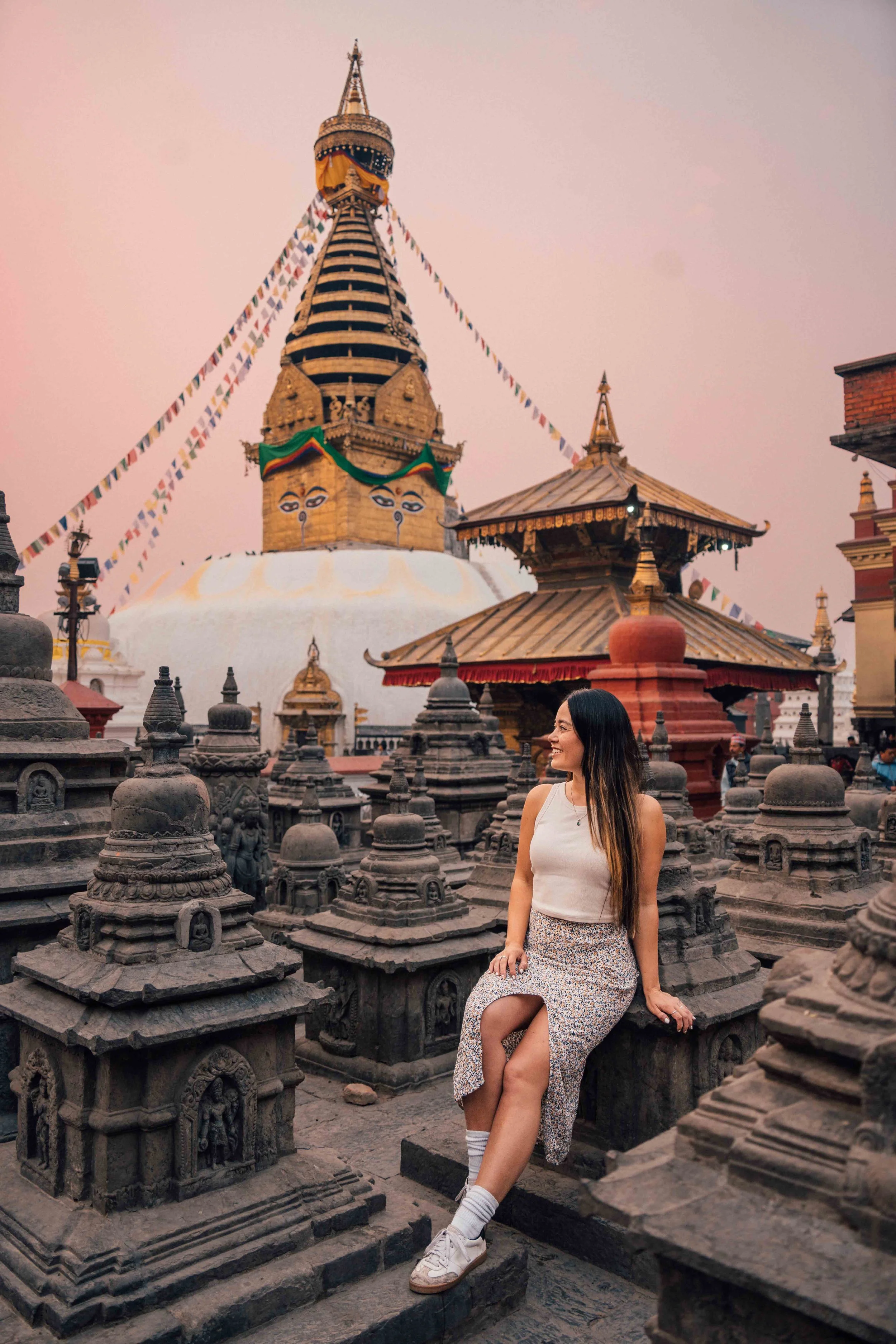
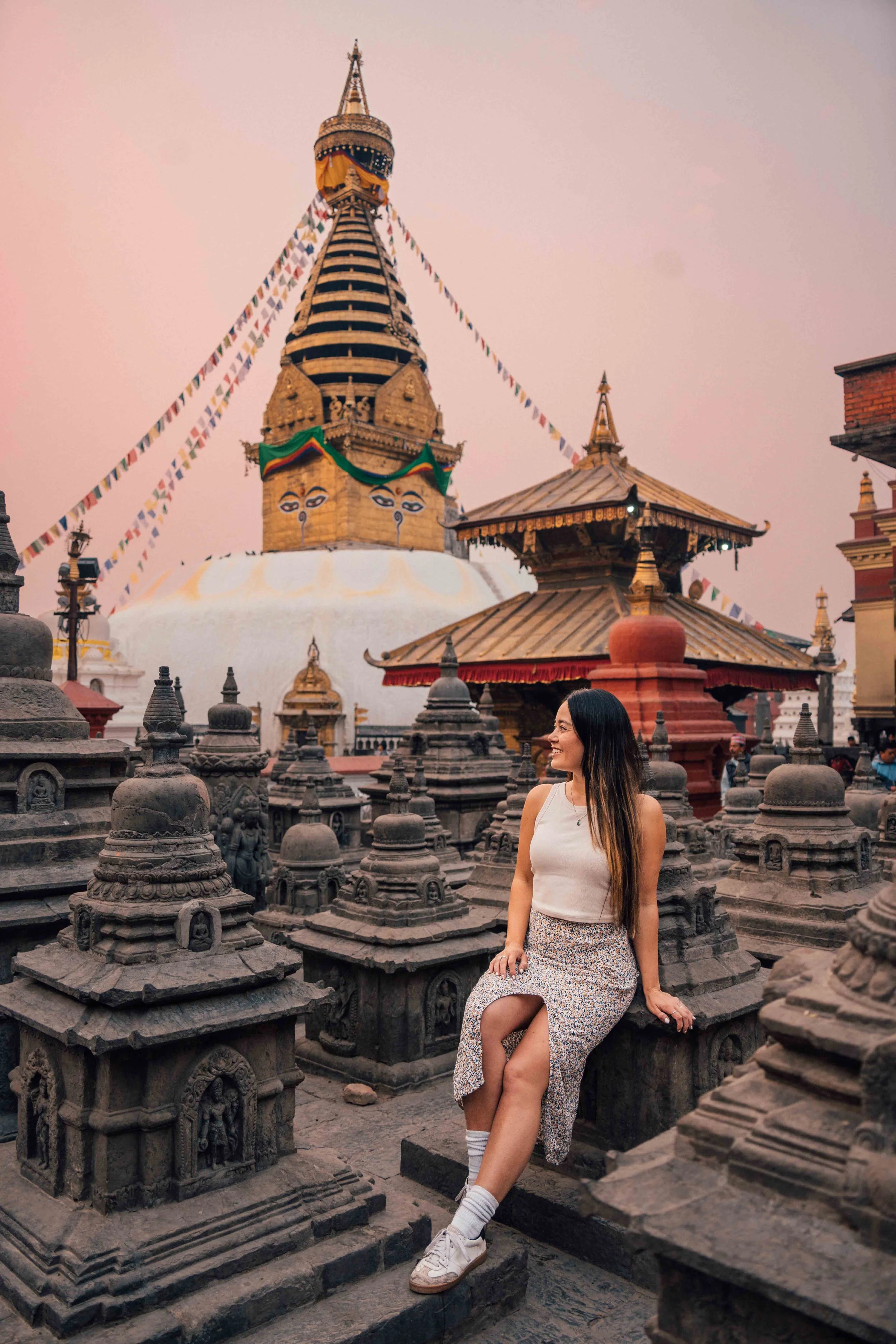
sunrise at Swayambhu Mahachaitya in kathmandu nepal

Kathmandu Accommodation Cheat Sheet

Neighborhood Deep-Dives & Hotel Tiers

Area 1: Thamel — The Beating Heart of Tourism

Why stay here?

It’s the ultimate hub. Everything a first-timer needs — ATMs, eSIM cards, cheap knock-off North Face gear, and great restaurants — is within a 5-minute walk.

Your expert tip

I suggest staying in North Thamel or Chhetrapati to avoid the thumping bass from the bars if you have a 5 AM flight to Lukla the next day!

luxury / splurge

Hotel Barahi Kathmandu or Dalai-La Boutique Hotel — Stylish, oasis-style comfort right in the mix with a gorgeous courtyard/pool to escape the dust.

Check prices & availability here.

Mid-range / value

Kathmandu Guest House — A legendary, historic property with a massive, peaceful garden. It’s been the meeting ground for climbers and trekkers since the 1960s. I personally stayed at Hotel Jampa and it was the perfect spot for all my needs pre and post-trek.

Check prices & availability here.

Budget / hostel

Flock Hostel Thamel or Thamel Heritage Hostel — Modern, incredibly clean, socially active but quiet enough to sleep. Perfect for solo travelers.

Check prices & availability here.

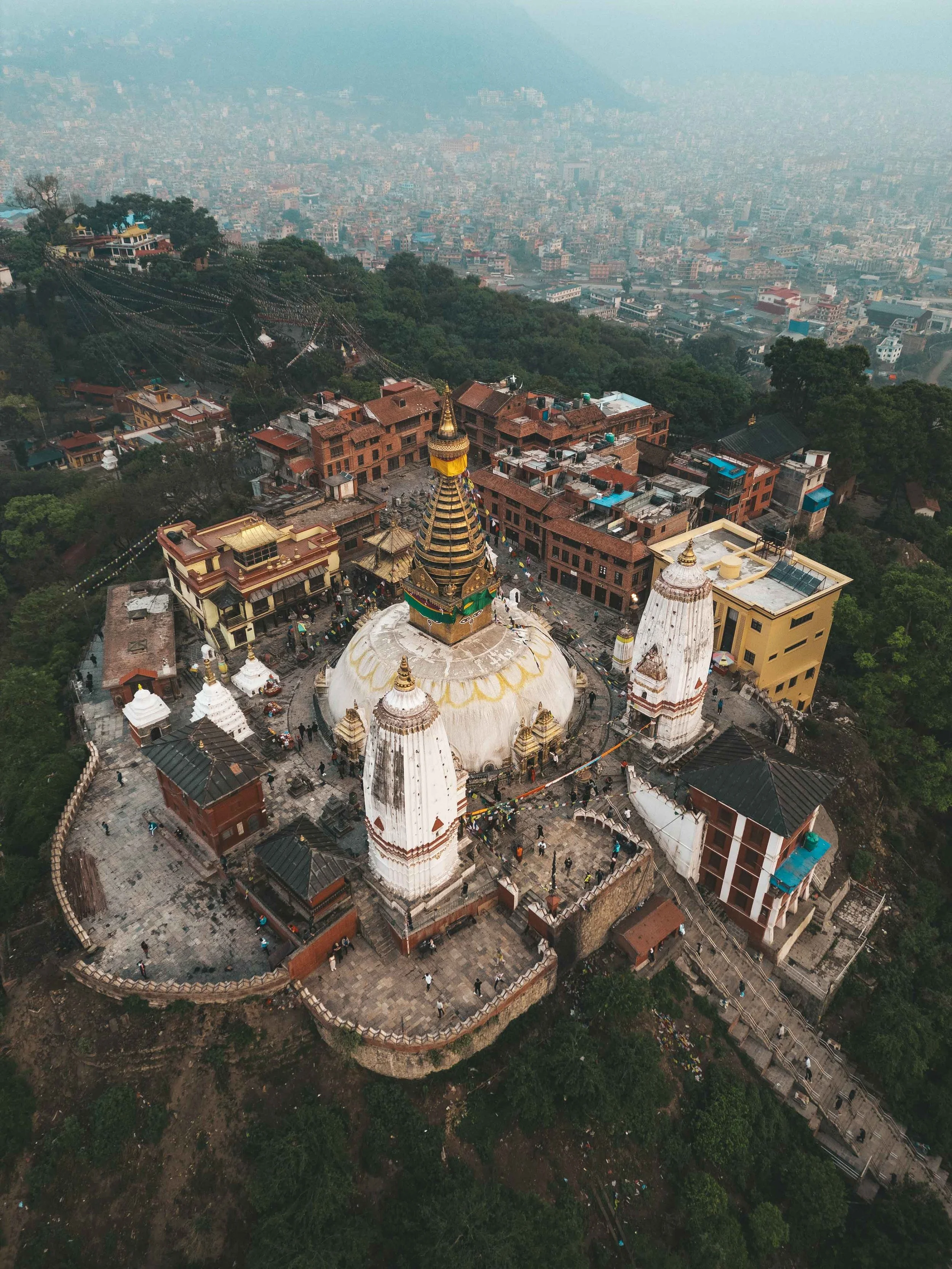
drone shot of Swayambhu Mahachaitya at sunrise

Area 2: Lazimpat – Quiet Comfort & Upscale Sanctuaries

Why stay here?

Just a 15-minute walk or a quick taxi ride north of Thamel, Lazimpat is the embassy district. It is significantly wider, greener, quieter, and less dusty. This is where you stay if you want to ease into Nepal gently after a long haul flight.  

Luxury / Splurge

Kathmandu Marriott Hotel or Hotel Shanker – Hotel Shanker is a stunning, authentic 19th-century Rana palace converted into a luxury property with a jaw-dropping pool.

[Check Prices & Availability]  

Mid-Range / Value

Nomad Hotel – A beautiful, trendy boutique hotel popular with expats, featuring a fantastic on-site cafe and local artisan decor.

[Check Prices & Availability]

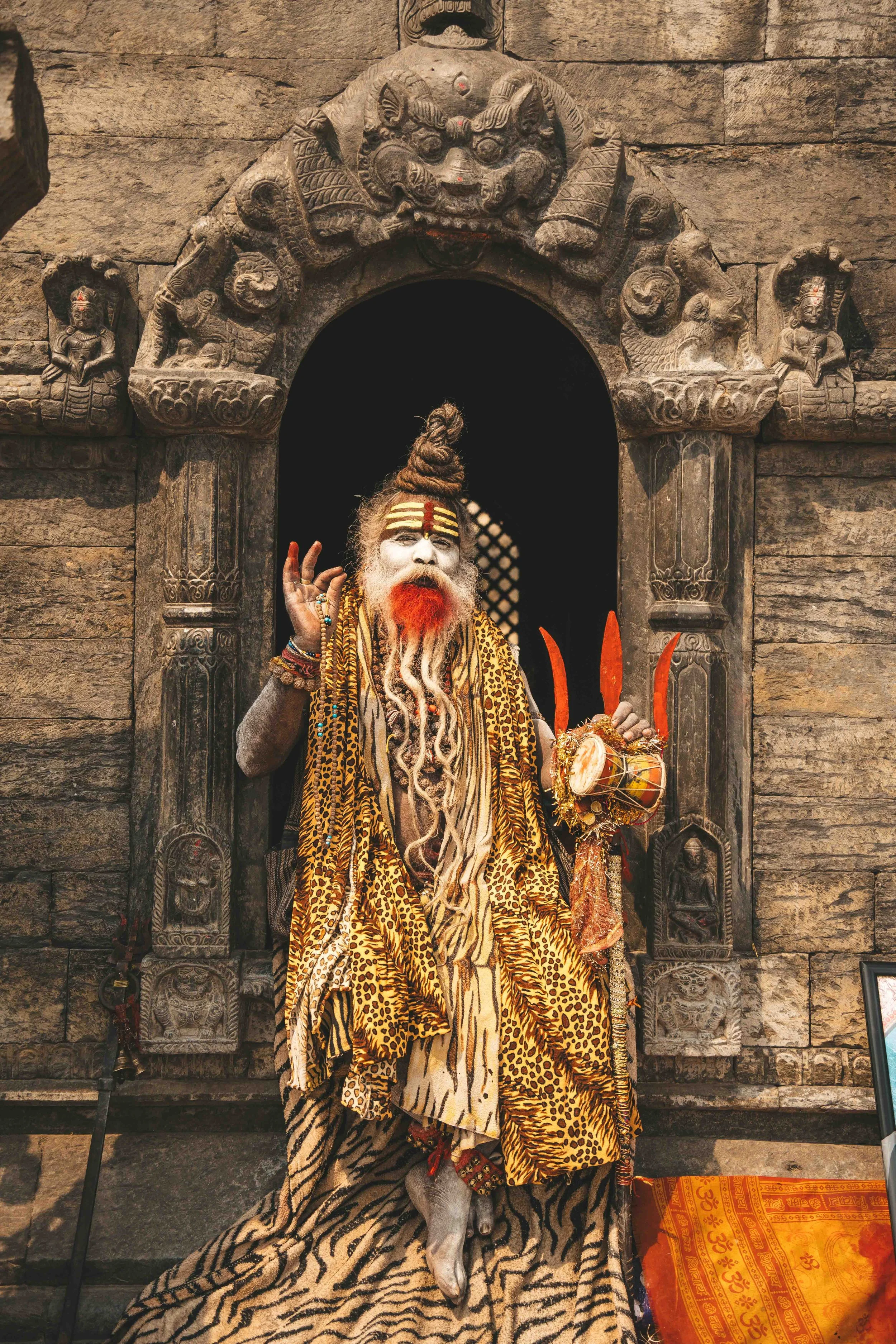
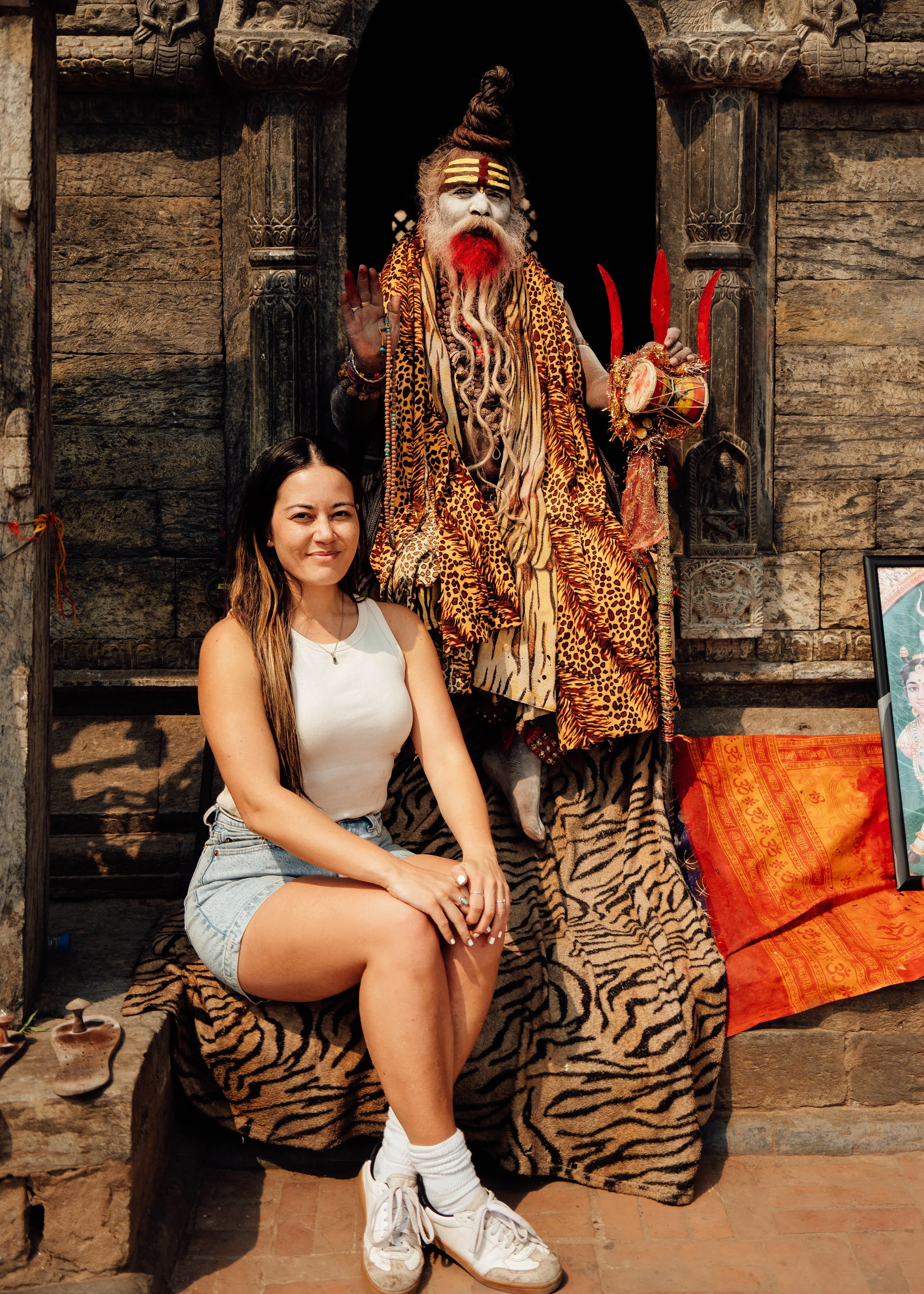
hindu sadhu at Pashupatinath Temple

Area 3: Patan (Lalitpur) – The Artistic & Cultural Hub

Why stay here?

Located south of the Bagmati River, Patan is an ancient kingdom in its own right. It’s paved in red brick, filled with artisan bronze workshops, and centered around arguably the most beautiful Durbar Square in the valley. It has a much more authentic, slow-travel feel.  

Luxury / Splurge

The Traditional Stay or local boutique heritage properties.

Mid-Range / Unique Experience

For a local experience, check out a Community Homestay in Patan. Community Homestay Network (CHN) is a social enterprise involved in developing and supporting a network of community-based homestays all across Nepal. They connect travelers with Communities across Nepal, providing travelers a unique opportunity to stay with Nepali families and immerse themselves in real Nepali life. At the same time, local communities get the opportunity to share their culture and landscapes with the world while gaining access to a sustainable source of income through tourism.The authentic experiences they offer travelers are created with the goal of having a direct socio and economic impact on local communities, women and families.

[Check Patan Homestays]

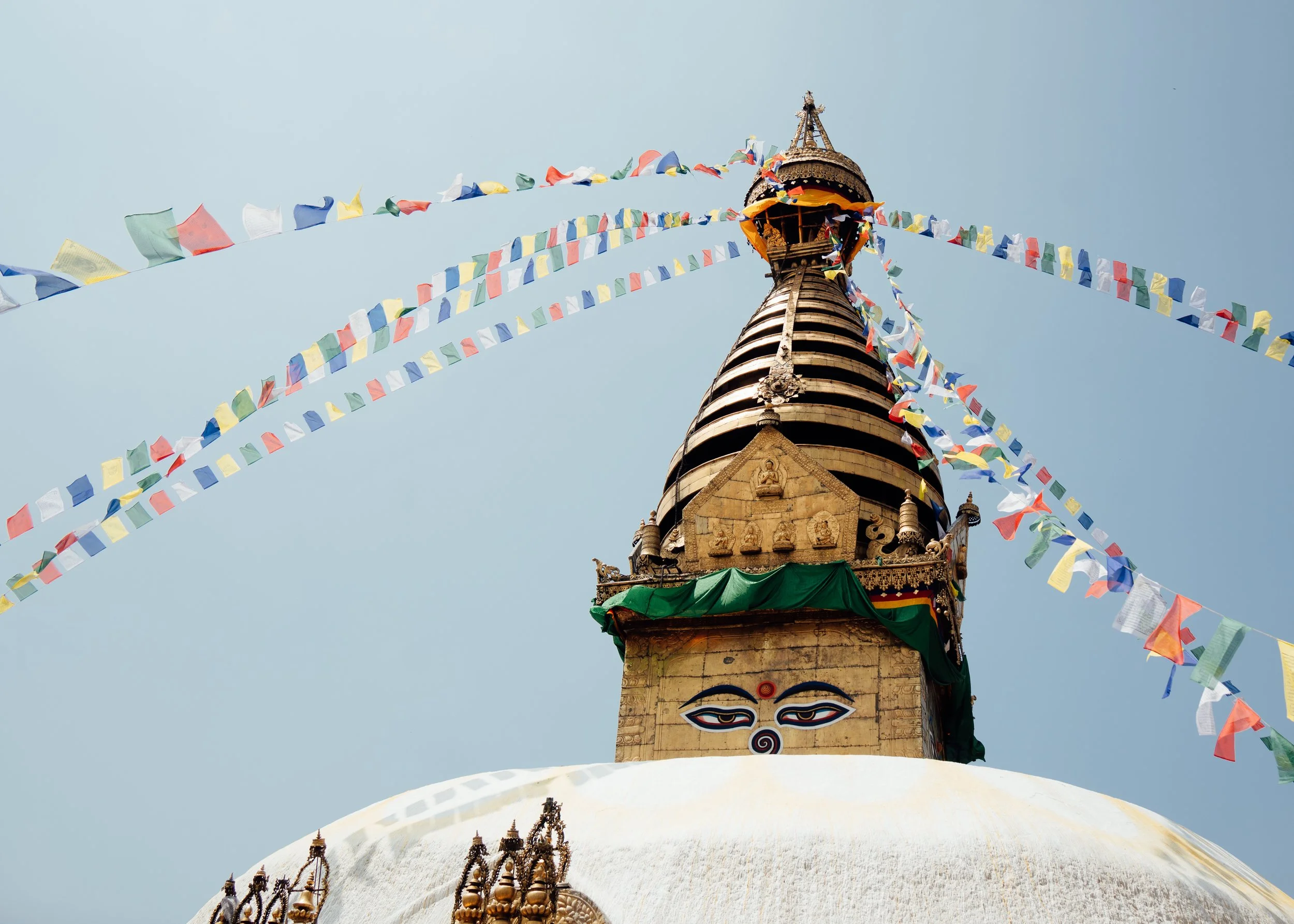
Boudhanath Stupa

Area 4: Boudha – Spiritual Serenity

Why stay here?

Centered around the massive, iconic Boudhanath Stupa (the white dome with the Buddha eyes). This area is the heart of the Tibetan refugee community. It feels entirely distinct from the rest of Kathmandu—filled with maroon-robed monks, burning incense, and chanting.  

Luxury / Splurge

Hyatt Regency Kathmandu – Massive grounds, a luxury pool, and a private back gate that steps right out onto the Stupa walkways. Perfect post-trek indulgence.

[Check Prices & Availability]  

Mid-Range & Budget

Shechen Guest House – Attached directly to the Shechen Monastery. It features a stunning vegetarian courtyard cafe and offers a profoundly peaceful stay.

[Check Prices & Availability]  

hindu sadhu at Pashupatinath Temple

Crucial Logistical Tips for Kathmandu Hotels

Check for Generator Backups

Even though power grids have vastly improved, localized cuts still happen. Ensure your hotel explicitly lists "24/7 power backup and solar hot water"—something standard in tourist hubs but missing in cheap residential rentals.

Airport Proximity Warning

Don't book a hotel just because it says "Near Tribhuvan International Airport." The area right outside the airport is chaotic and lacks tourist infrastructure. Stick to Thamel or Lazimpat; they are only 20–30 minutes away by taxi anyway.

Everything you need to know about Samoa

Samoa

Looking for a comprehensive, expert-vetted Samoa travel guide that goes beyond the basic resort recommendations? You’re in the right place. Samoa is an absolute paradise for independent adventurers, country counters, and visual storytellers, but pulling off a seamless trip requires a solid understanding of local infrastructure and cultural etiquette. From exploring the iconic To Sua Ocean Trench to navigating the ferry between the main islands, this ultimate guide covers everything you need to know about Samoa — including transportation logistics, safety tips, accommodation breakdowns, and essential cultural protocols — so you can travel confidently and responsibly.

If you’re here from my post “How to visit every country in the Pacific,” welcome! This is going to be a little more of an in-depth guide on my trip to the country of Samoa.

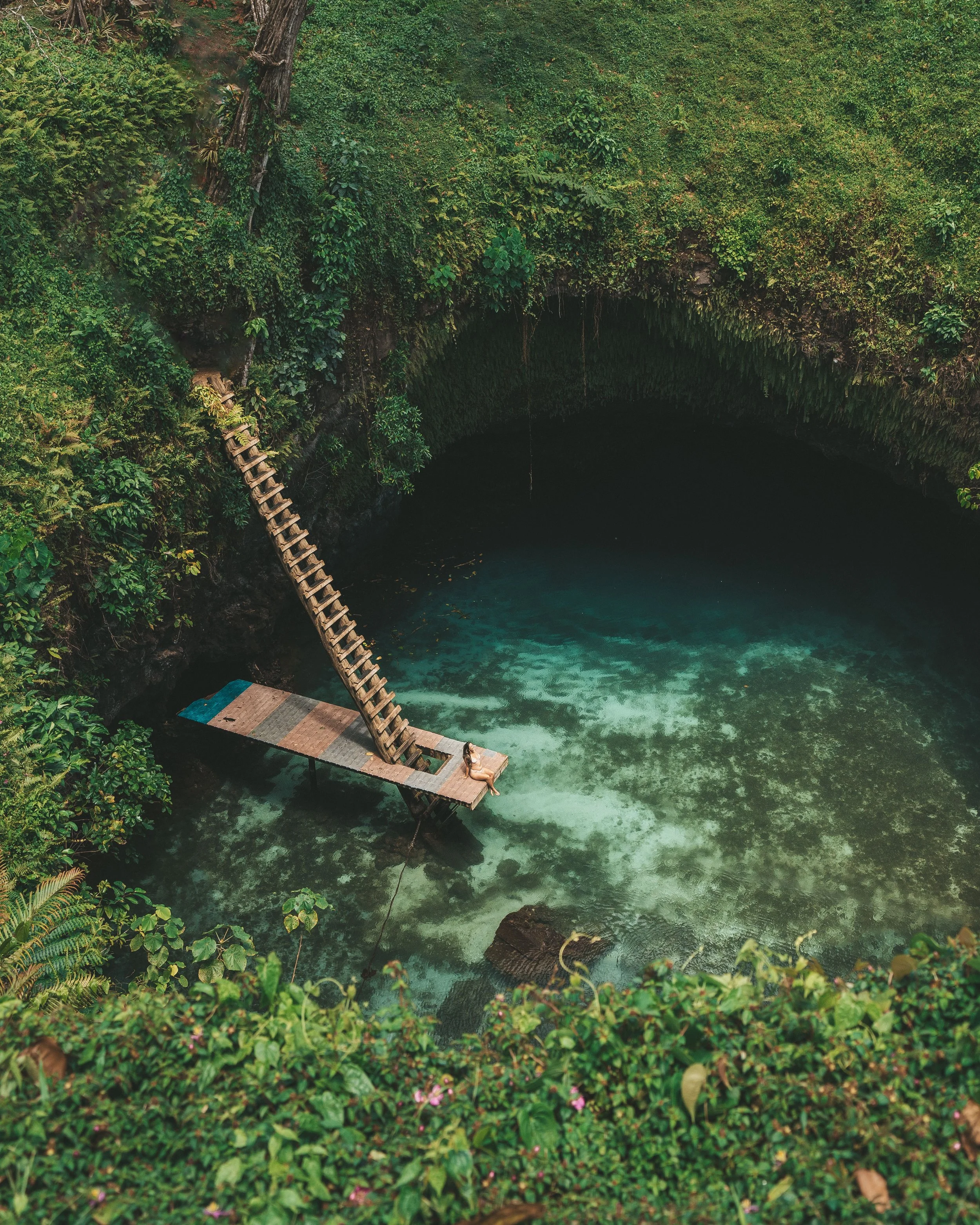
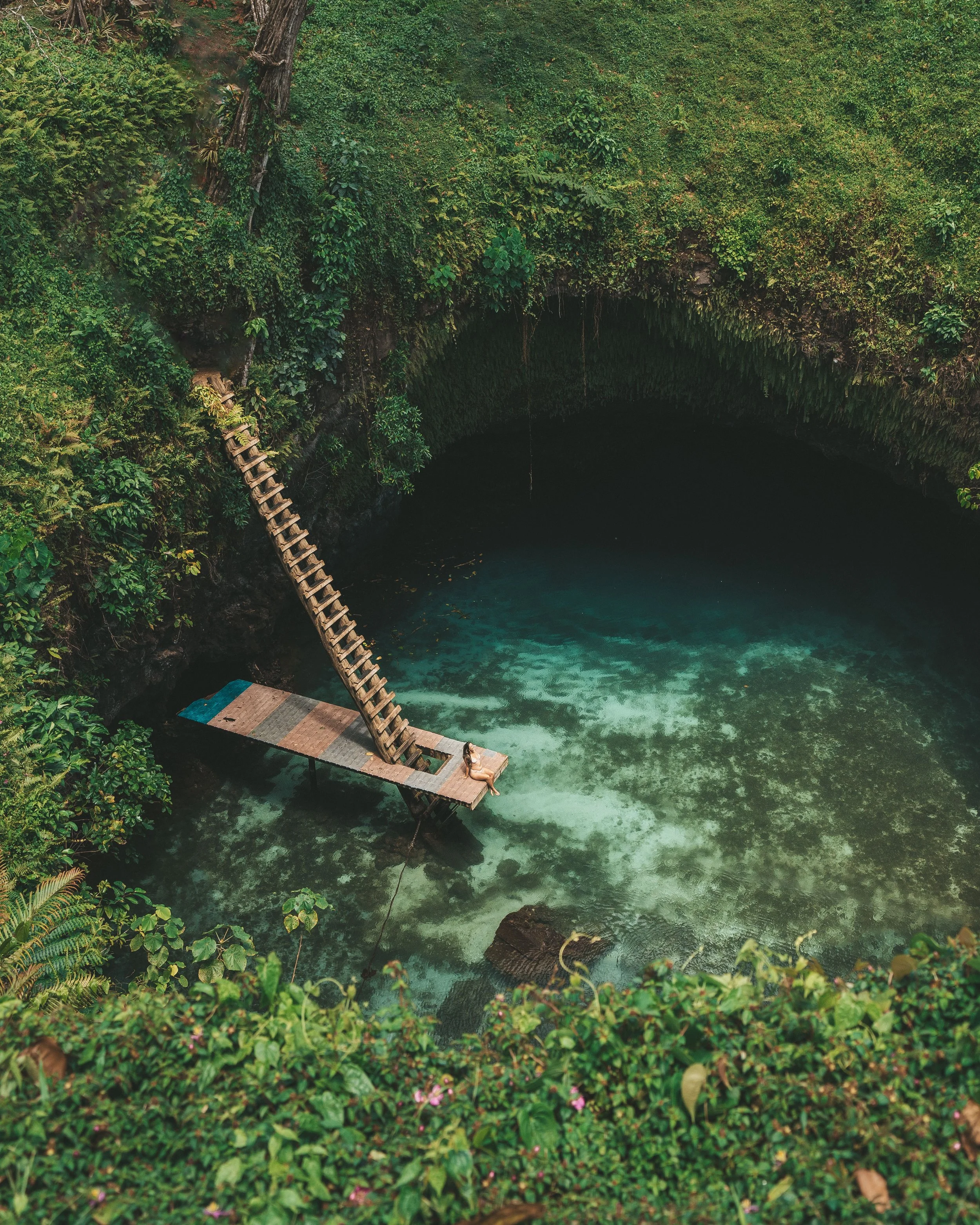
To Sua Ocean Trench

How to get to Samoa

The international airport is in Apia, the capital of Samoa, on the island of Upolu. You can find direct flights from Australia and New Zealand, however, the cheapest way is the fly from Fiji via Fiji Airways. If you’ve been reading my other posts on traveling through the Pacific we flew from Nadi as part of the Fiji Airways loop.

Where to stay in Apia, Samoa

We were trying to find something relatively affordable with a good location in the capital, and we ended up staying at The White House Hotel. From the hotel you can walk around the city, but it was so hot we ended up just taking our rental car everywhere. It was also Sunday when we visited, and EVERYTHING was closed on Sunday, except McDonald’s so we had to drive there for breakfast since it was a bit far from our hotel. The wifi was reliable and AC was perfectly cold so overall was a good stay. Breakfast was not included, like I mentioned.

Perfect for: Independent travelers, budget country counters, and creators who need a clean, safe, and air-conditioned basecamp while exploring Upolu during the day.

Skip if: You are looking for a luxury, all-inclusive resort experience with private beach access and poolside service (for that, you’ll want to head further south down the coast).

SEARCH | Alternatively, check out Booking.com for more options in the area.
Staying connected in Tonga

My friends and I all used the Airalo Oceania Esim for this trip, which covers eight countries in Oceania and specifically seven of the countries on this trip through the South Pacific. It’s cheaper than buying individual esims or physical sim cards for each country so it’s a great deal and you can top-up if you run low on data. I personally love using esims since you’re instantly connected when you land to look up directions, currency rates, or language translations. Yes, Samoa is covered on the Airalo Oceania Esim, but if you’d rather purchase a Samoa esim separately you can check it out here.

SEARCH | Alternatively, check out Airalo.com for more esim options.

How to get around Apia, Samoa

Unfortunately public transportation isn’t great in Samoa and you really need a rental car to get around. We couldn’t find anything online to reserve in advance but there are a lot of people waiting in front of the airport arrivals that will take you to the rental. We ended up going with Sak’s Rental, and you can email them at: saksrental.samoa@gmail.com . If you’d rather not drive yourself there are some tours that can take you around to all the sights of the island.

SEARCH | Alternatively, check out Viator.com for more Samoa tour options.

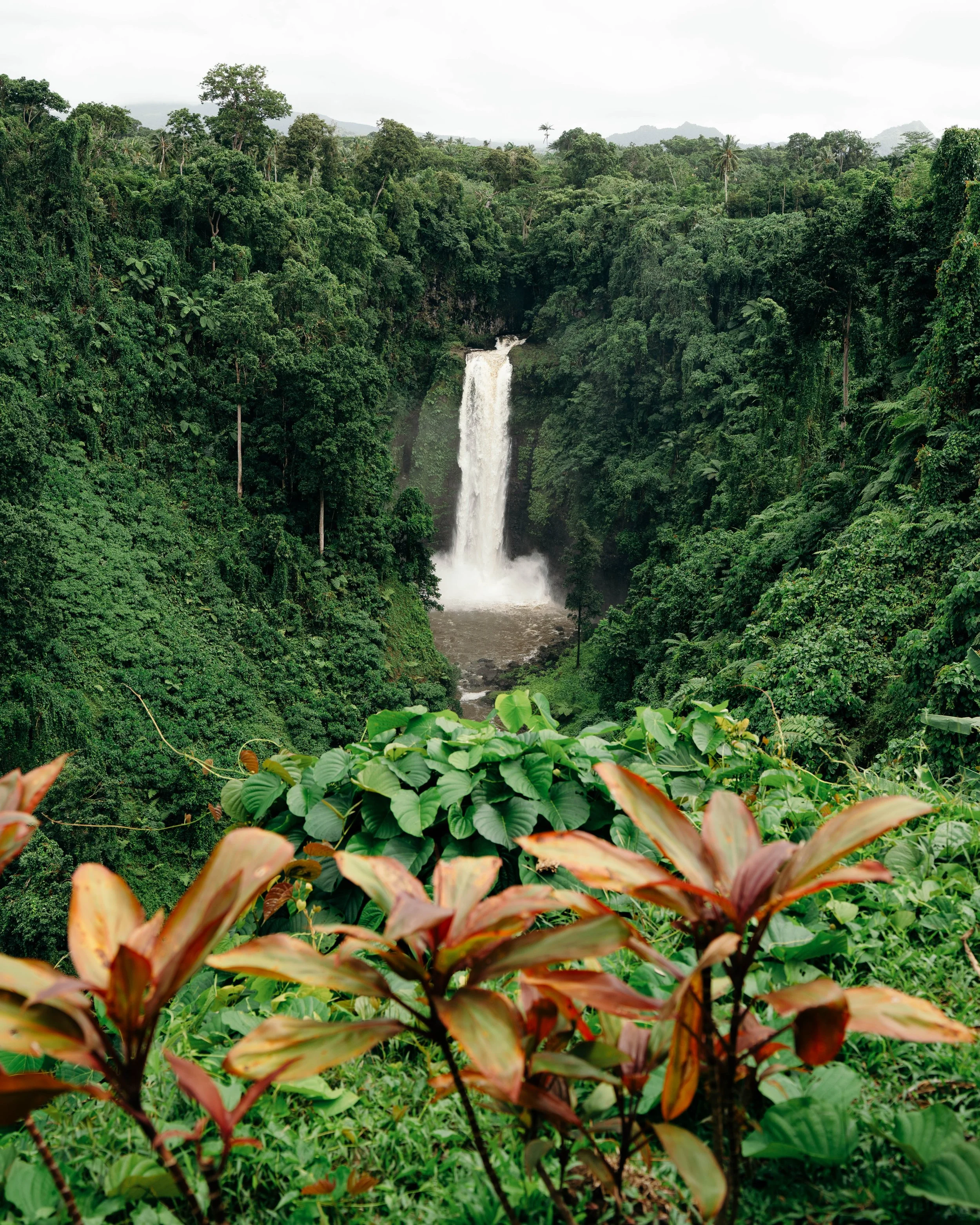
View of Papapapaitai Falls in Samoa

Best Itinerary from Apia

We had one full day in Samoa to drive around and see all the sights so this everything we did that fully encompassed our time! Another note, even though I mentioned it before, the full day was on Sunday and EVERYTHING is closed. If you only have one day and can avoid that I would recommend it, but we made do!

Papapapaitai Falls

Our day pretty much revolved around getting to To Sua Ocean Trench when it opened, but on Sundays it doesn’t open til noon. We had a relaxing morning getting breakfast at McDonald’s (it was the only thing open sadly) and then we started driving towards the Papapapaitai Falls. I wouldn’t go out of my way to come here but it’s along the route to To Sua Ocean Trench and we had time to kill.

To Sua Ocean Trench

Everyday except Sunday it opens at 8 AM, but on Sundays it opens at 12:30. It was really hot by the time it opened past noon, but the lighting was decent to take photos of the bright blue waters. I didn’t really know what to expect but there’s a large parking lot, a convenience store where you pay the entry fee, changing rooms, then you have to walk a bit to the trench. There are beautiful fales around where you can hang out with a view of the ocean behind.

Lalomanu beach

This area is the best for beaches on the island so we headed there after and hung out at Taufua Beach Cottages. We had an amazing traditional Samoan seafood buffet meal for lunch and then hung out on the fales on the beach. It was the perfect place to relax in the afternoon and jump in the ocean. This hotel for €50 is nearby if you have more time and want to book something in advance. I would have loved to stay the. night in a traditional fale on the beach, but maybe next time!

SEARCH | Alternatively, check out Booking.com for more options in the area.
Fuipisia Waterfall

On the way back to Apia we decided to take a different route back that was about the same length of time to stop at a different waterfall: Fuipisia Waterfall. The other waterfall was a little built-up but this one had nothing around; it was just a stop on the side of the road. Again, I wouldn’t recommend going out of the way for this, but if it’s on your route then you can check it out.

Samoa Budget

FLIGHTS: $432 USD

The whole Fiji Airways loop (Vanuatu - Tonga - Samoa - Tuvalu - Fiji - Solomon Islands) cost $2072 USD, but to just break it down, from Tonga to Samoa cost about $216 USD and the flight from Samoa to Tuvalu cost about $216 USD.

HOTEL: $67 USD

Our guesthouse cost $268 USD for two nights, but we split it four ways so it was $67 per person, or $33.50 per person per night.

RENTAL CAR: $96.25 USD (Total was $385 USD, split 4 ways)

FOOD & DRINKS: $73 USD

TOTAL SPENT FOR SAMOA: $668 USD

Where to Stay in the Dolomites: Cortina d'Ampezzo vs Val Gardena

The Dolomites

Jagged limestone peaks, emerald valleys, and dramatic alpine meadows define the Dolomites, a UNESCO World Heritage region in northeastern Italy. Renowned for their pale, vertical cliffs and spectacular light at sunrise and sunset, the range offers year-round adventure: world-class climbing and via ferrata in summer, and exceptional skiing and snowshoeing in winter. Charming mountain villages, traditional Ladin culture, and hearty local cuisine complete the experience, making the Dolomites a striking blend of natural grandeur and alpine tradition.

Cortina d’Ampezzo offers elegant, high-altitude scenery with dramatic Dolomite peaks, chic cafés, and well-marked hiking and climbing routes—ideal for panoramic walks, via ferrata, and relaxed mountain culture. Val Gardena / Ortisei is more activity-focused, with extensive trail networks for hikers and mountain bikers, strong Ladin culture, and easier access to the Sella Ronda for long day tours. Choose Cortina for scenic sophistication and shorter, scenic excursions; choose Val Gardena for outdoor adventure, family-friendly trails, and a denser network of mountain-sport options.

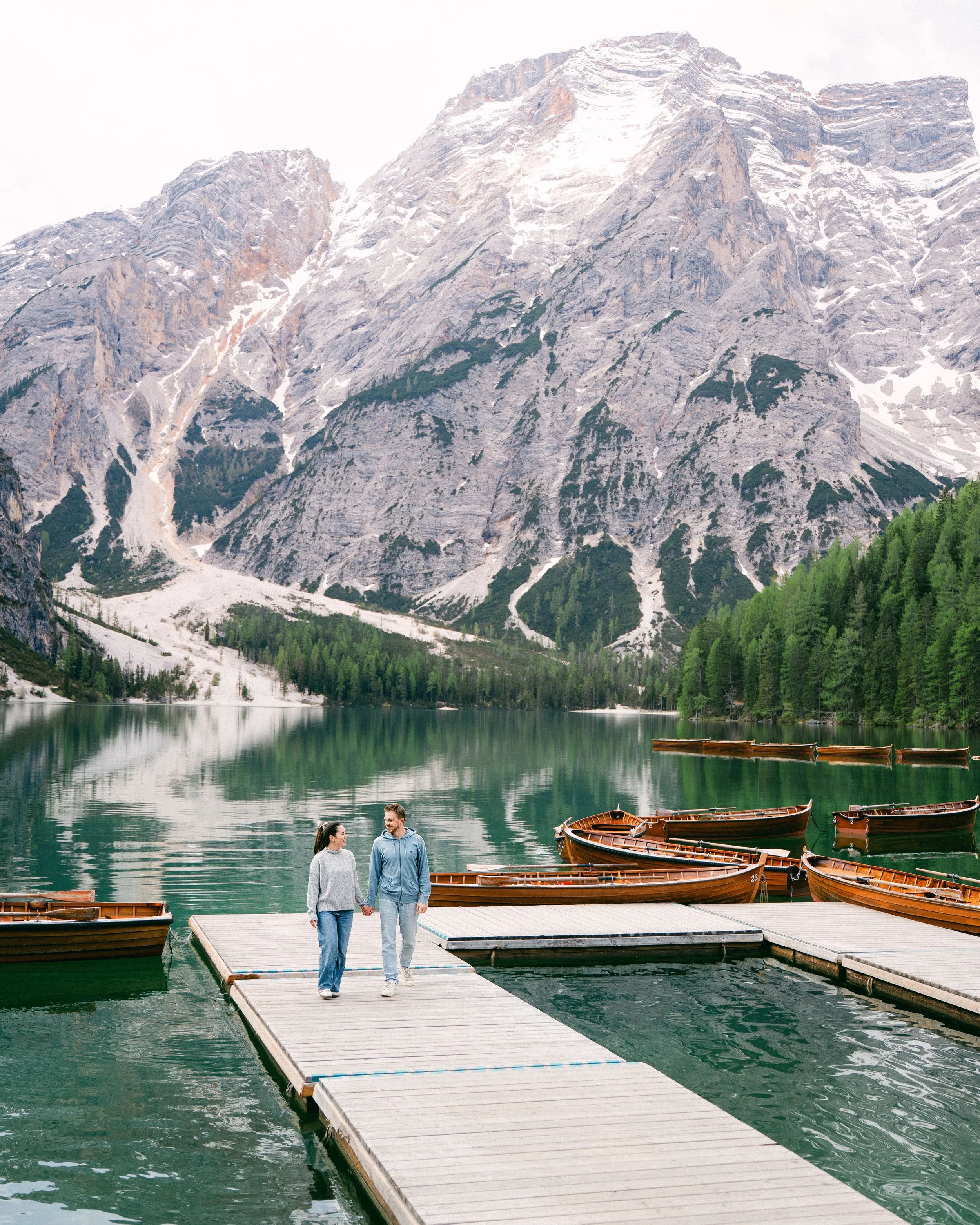
May at Lago di Braies

Should I stay in Cortina d’Ampezzo or Val Gardena / Ortisei in the Dolomites?

When I first moved to northern Italy, I had no idea just how vast the Dolomites were. Sometimes it can take up to three hours to get from one side to the other, which is why it’s so important to choose where you stay carefully! When planning your trip, I recommend planning your days around visiting spots around Cortina and then places on the Ortisei side. In this guide I’ll share the most iconic locations in the Dolomites in relation to the Cortina d’Ampezzo side versus the Val Gardena / Ortisei area.

Top locations to visit close to Cortina d’Ampezzo

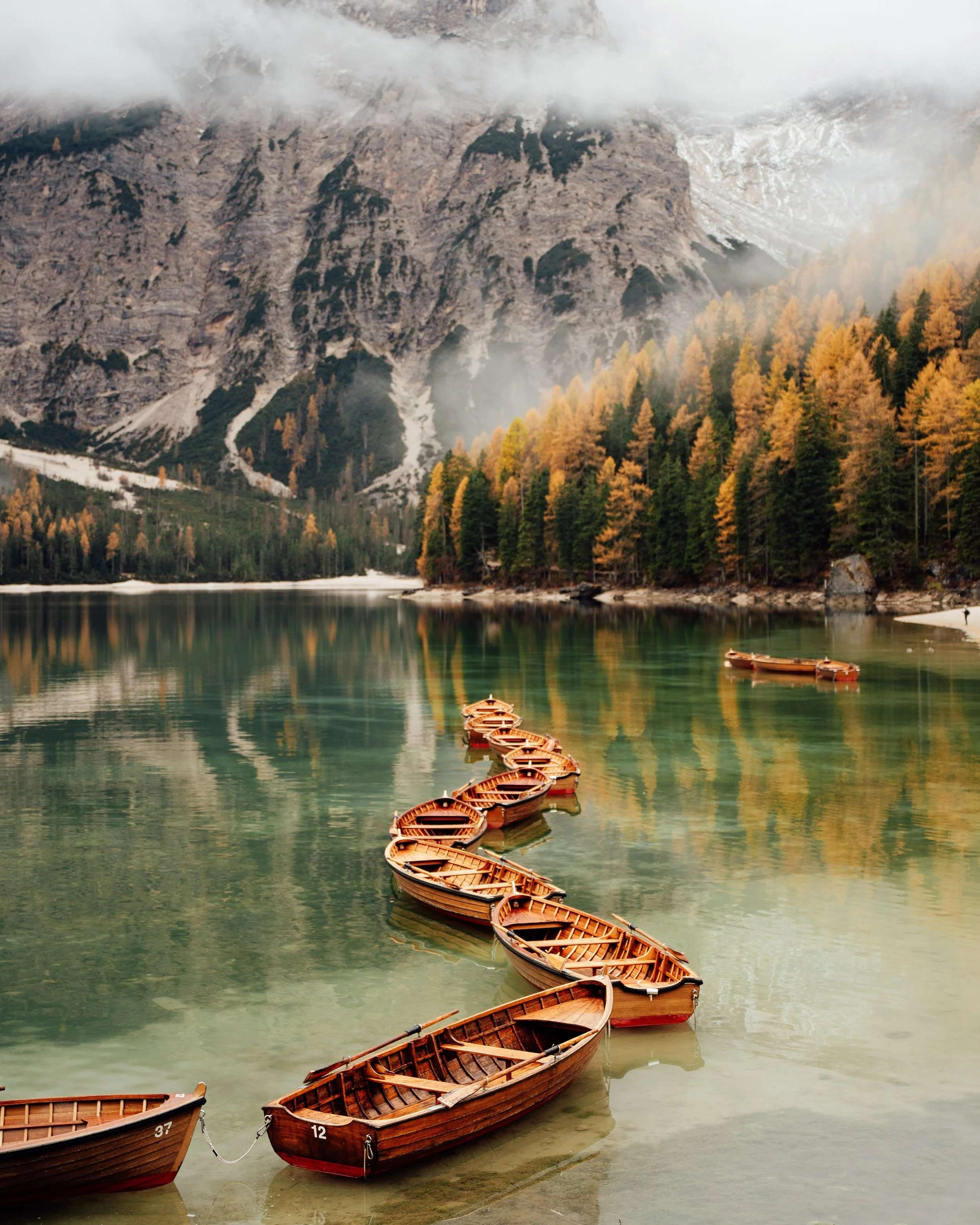
October at Lago di Braies

Lago di Braies

Lago di Braies is probably the most iconic destination in all of the Dolomites, so if you’re headed here it’s about one hour from Cortina. There are places to stay closer to Lago di Braies, of course, but this guide is to help generalize where to stay so you’re not moving hotels every night or booking someplace on the Ortisei side. I recommend visiting this lake close to sunrise to avoid the most people.

Tre Cime di Lavaredo

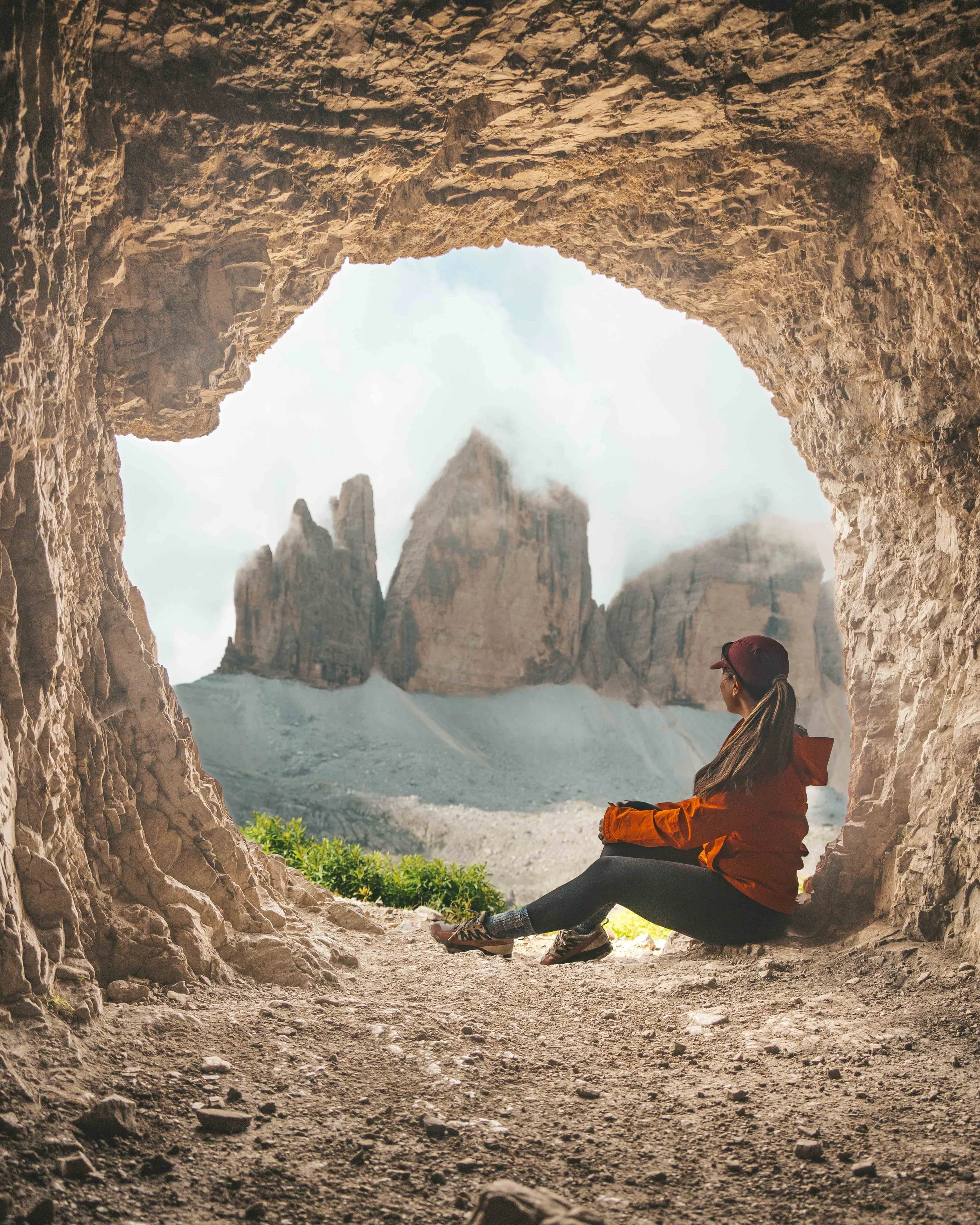
One of the top hikes close to Cortina d’Ampezzo is Tre Cime di Lavaredo. As of 2025 you need to purchase a pass for the toll roads online in advance, so make sure you select a time slot that fits your schedule. This hike takes about 4 hours, not including if you add on Cadini di Misurina. You’ll start the hike at Rifugio Auronzo (put that into your GPS when navigating here), which is about a 45 minute drive from Cortina d’Ampezzo.

Lago di Sorapis

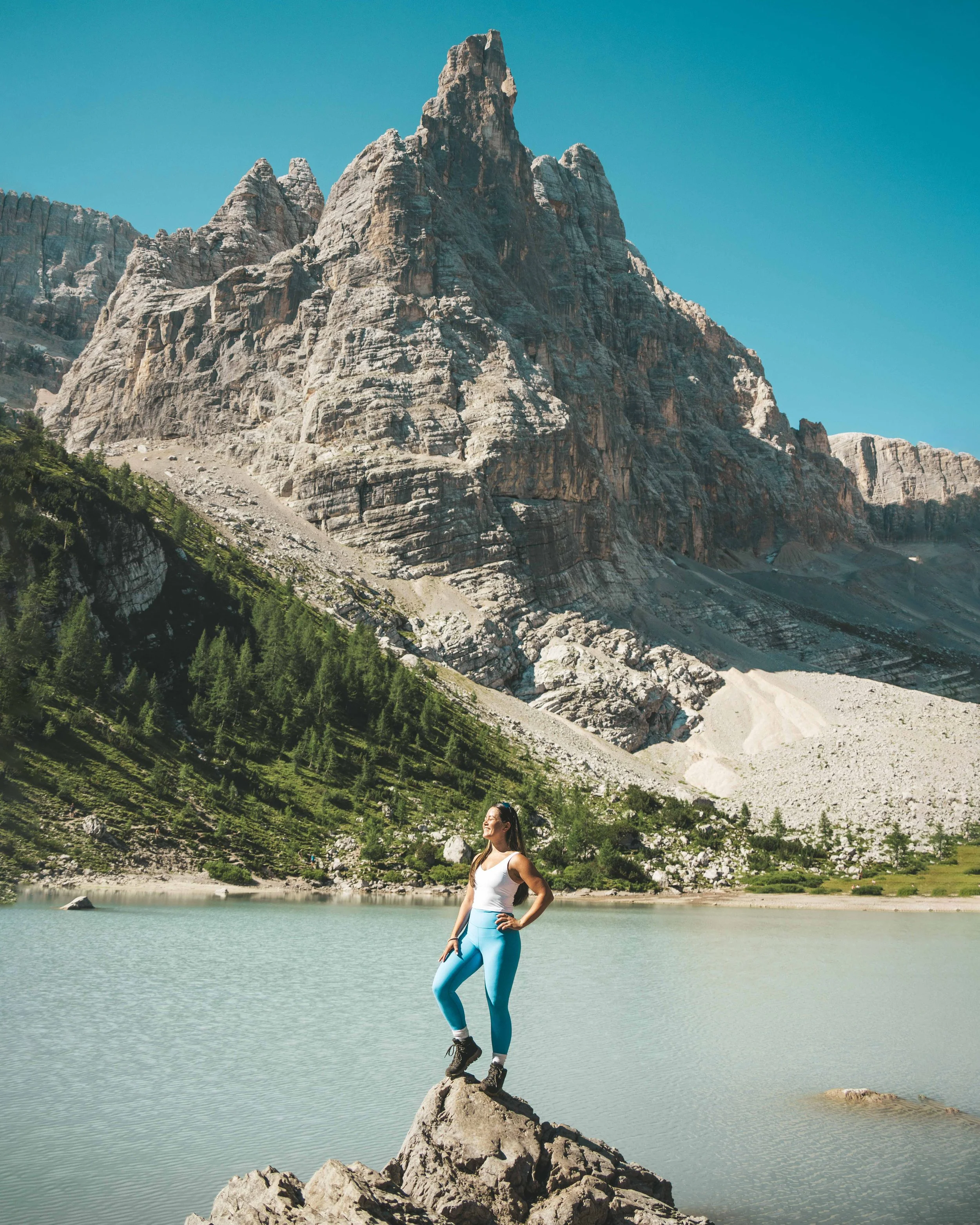
Known for its stunning iridescent blue waters, Lago di Sorapis is another popular hike and is only about 20 minutes from Cortina d’Ampezzo. There are two ways to get to the lake from the parking lot: an easy way and a hard way. I was training for Mt. Blanc so I took the hard way, and it was challenging! So make sure you check which trail you’re taking beforehand.

Best hotels close to Cortina d’Ampezzo

Now that we’ve established the most popular locations and hikes near Cortina d’Ampezzo, let’s talk about hotels! These are some of the most popular ones you’ll see on Instagram and social media:

Hotel Hubertus

Hotel Hubertus is about one hour from Cortina d’Ampezzo and only 30 minutes from Lago di Braies, making it the perfect location if you’re looking for something in that area!

Hotel Chalet Mirabell

Hotel Chalet Mirabell

Chalet al Foss

Chalet al Foss

Everything you need to know about Tonga

Tonga

Traveling to Tonga offers a blend of unspoiled natural beauty and warm, welcoming culture: turquoise lagoons and coral reefs invite snorkeling and whale‑watching, while verdant islands and hiking trails reveal quiet villages and traditional fale. With fewer tourists than neighboring Pacific destinations, Tonga feels authentic and undiscovered, where local festivals, kava ceremonies, and friendly islanders provide meaningful cultural exchange. Practical travel tips include planning around seasonal weather (November–April can be wet), arranging inter‑island transport in advance, and respecting local customs such as modest dress and Sunday observance.

If you’re here from my post “How to visit every country in the Pacific,” welcome! This is going to be a little more of an in-depth guide on my trip to the country of Tonga.

How to get to Tonga

The main thing we wanted to do in Tonga was to swim with the humpback whales, so you have two options: Fua'amotu International Airport (TBU) or Vavau International Airport (VAV). TBU is on the main island of Tongatapu, just a short drive from the capital, Nuku'alofa, but the island of Vava’u is known for more humpback whale opportunities. We decided on flying into TBU would be better for our schedule; there are about 3 flights per day — one from Nadi (Fiji), one from Auckland (New Zealand), and one from Sydney (Australia). If you’ve been reading my other posts on traveling through the Pacific we flew from Nadi as part of the Fiji Airways loop.

Where to stay in Nuku’alofa, Tonga

There weren’t a lot of affordable hotel options, unfortunately, but we found some reasonably priced guesthouses and ended up staying at Toni’s Guest House. They picked us up from the airport and set us up with a rental car, which was necessary to get around. The guest house is in a good location relative to the capital, but you definitely need a car. I wouldn’t say it was my favorite place I’ve ever stayed, but we didn’t spend much time there besides to sleep so it was fine. I’ll attach a link below for a few other options you can check out.

SEARCH | Alternatively, check out Hostelworld.com for more options in the area.

Staying connected in Tonga

My friends and I all used the Airalo Oceania Esim for this trip, which covers eight countries in Oceania and specifically seven of the countries on this trip through the South Pacific. It’s cheaper than buying individual esims or physical sim cards for each country so it’s a great deal and you can top-up if you run low on data. I personally love using esims since you’re instantly connected when you land to look up directions, currency rates, or language translations. Yes, Tonga is covered on the Airalo Oceania Esim, but if you’d rather purchase a Tonga esim separately you can check it out here.

SEARCH | Alternatively, check out Airalo.com for more esim options.

How to get around Nuku’alofa, Tonga

Unfortunately public transportation isn’t great in Tonga and you really need a rental car to get around. Like I mentioned previously, Toni’s Guest House set us up with a rental car, but if you’d rather not drive yourself there are some tours that can take you around to all the sights of the island.

SEARCH | Alternatively, check out Viator.com for more Tonga tour options.

Best Itinerary from Nuku'alofa

Day 1: Drive around the island

We got in a little after midnight and our guesthouse owner picked us up from the airport. They were able to set us up with a rental car, and we drove to the “Stonehenge of the Pacific” and the Anahulu Cave.

DAY 2: Swim with the humpback whales

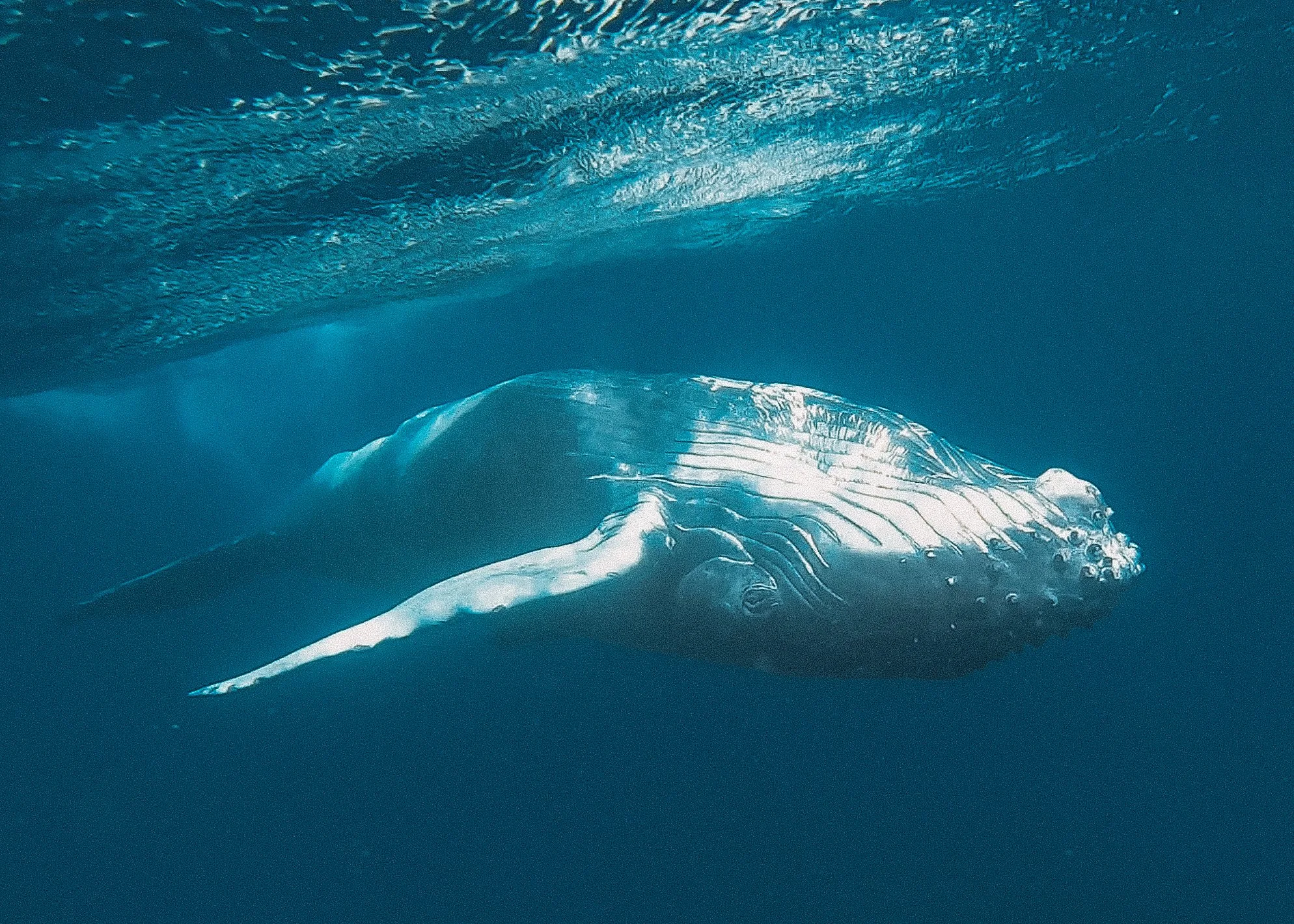
This has been on my bucketlist for a long time and August / September is the best time to do this. It is an expensive excursion, so you want to be aware of who you book with — some tours pack 30+ people onto a boat so it’s hard to get time in the water before the whales get scared off. I highly recommend finding a private boat driver with maximum six people onboard so you get the best experience and value for your money.

One of the most recommended humpback whale companies is Deep Blue Tonga, and I was originally going to book with them, but then I found out they usually pack their boats full so you’re constantly in someone’s way or vice versa. I had a similar experience with whale sharks in Mexico, and since Tonga isn’t as easily accessible of a country, I was willing to pay more for a better experience because who knows if I’ll ever do this again!

I ended up booking with an independent guide with his own boat; his name is Loni and his Whatsapp is +6768633297. He had a six passenger boat but guaranteed it would just be me and my friends — and he’s a master at finding humpback whales! We had the most incredible up-close experience in the water for 45 minutes with a mama and her calf — couldn’t have asked for better. Loni asked for the payment up-front, which I was skeptical about, but I sent the money via Western Union and everything panned out. Please remember that humpback whales are wild animals so nothing is guaranteed! But having a skilled guide with his own smaller boat helps.

Day 3: Departure

This was a very tight schedule, especially if you’re trying to see humpback whales, but we got super lucky! I would recommend more days for more guaranteed sightings, but having at least two full days was perfect on our tight schedule hopping through the Pacific.

Tonga Budget

FLIGHTS: $432 USD

The whole Fiji Airways loop (Vanuatu - Tonga - Samoa - Tuvalu - Fiji - Solomon Islands) cost $2072 USD, but to just break it down, from Vanuatu to Tonga cost about $216 USD and the flight from Tonga to Samoa cost about $216 USD.

AIRPORT PICK-UP: $12.75 USD

The total was 120 Tongan Pa’anga, or $51 USD, then split four ways it was $12.75 USD.

HOTEL: $87 USD (210 Tongan Pa’anga)

Our guesthouse cost $356 USD (840 TOP) for two nights, but we split it four ways so it was $87 per person, or $43.50 per person per night.

RENTAL CAR: $54 USD (Total was $216 USD, split 4 ways)

FOOD & DRINKS: $73 USD

HUMPBACK WHALES: $350 USD

TOTAL SPENT FOR TONGA: $1009 USD

Best Three Day Itinerary for Vanuatu

Vanuatu

Vanuatu is an archipelago of about 80 islands in the South Pacific known for its lush volcanic landscapes, clear turquoise waters, and rich Melanesian culture. Visitors can snorkel vibrant coral reefs, explore active volcanoes, and experience traditional dances, kastom villages, and kastom sand drawings. The islands offer a relaxed pace, fresh seafood, and unique attractions like the underwater post office and cultural festivals, making Vanuatu an appealing destination for adventure, nature, and cultural travel.

If you’re here from my post “How to visit every country in the Pacific,” welcome! This is going to be a little more of an in-depth guide on my trip to the country of Vanuatu.

How to get to Vanuatu

Vanuatu is one of the more popular destinations in the South Pacific, so you shouldn’t have a problem trying to find a flight. Flights operate everyday from Australia, New Zealand, Fiji, and the Solomon Islands. We ended up flying from Brisbane to Port Vila, Vanuatu and then after onwards to Fiji.

Where to stay in Port Vila

There are a lot of options since Vanuatu is more of a touristy destination, but since there was four of us for this leg of the trip we stayed at Pacific Lagoon Apartments so we could cook and hang out together. If you have a rental car this was a pretty central location, but it definitely wouldn’t be easy if you’re just planning on walking.

SEARCH | Alternatively, check out Booking.com for more options in the area.
Staying connected in Vanuatu

My friends and I all used the Airalo Oceania Esim for this trip, which covers eight countries in Oceania and specifically seven of the countries on this trip through the South Pacific. It’s cheaper than buying individual esims or physical sim cards for each country so it’s a great deal and you can top-up if you run low on data. I personally love using esims since you’re instantly connected when you land to look up directions, currency rates, or language translations. Yes, Vanuatu is covered on the Airalo Oceania Esim, but if you’d rather purchase a Vanuatu esim separately you can check it out here.

SEARCH | Alternatively, check out Airalo.com for more esim options.

How to get around Vanuatu

We decided to rent a car to get the most out of our time in Vanuatu, and so we could get to the touristy spots early and avoid crowds. You can see all the sights of the island in pretty much a full day, and everyone does the same loop. If you can get on the road early and beat everyone to the first stop, you will beat everyone to the rest of the attractions.

Rental car options are limited; we managed to snag a rental since we were the first ones out of customs in the arrival hall of the airport, but you should try making a reservation online in advance. Expedia seems to have the best rates for rental cars.

SEARCH | Alternatively, check out Expedia.com for more options in the area.

Best Itinerary from Port Vila

Day 1: Arrival

We arrived at Bauerfield International Airport in Port Vila at 2 PM and did the usual money exchange, sim cards, rented a car, then found the guesthouse we were staying at. There was a grocery store along the way so we stopped for groceries and made dinner.

After dinner we met up with another friend who had a collaboration with the Vanuatu tourism board, and they were at the Kava Lounge. Kava is a traditional Pacific Island beverage made from the ground roots of the kava plant, known for its calming, mildly sedative effects and earthy, peppery flavor. I personally didn’t try kava but it seemed like a nice atmosphere and place to do it! If the Vanuatu tourism board recommended this place, it’s probably the spot to check out.

Day 2: Loop around Efate island

We got on the road early in the morning to drive to the Blue Lagoon so we could be there right when it opened at 8 AM. It was 1500 Vatu per person (about $12 USD) and you need to pay in cash. We were the first ones in and had it all to ourselves before the tour buses showed up!

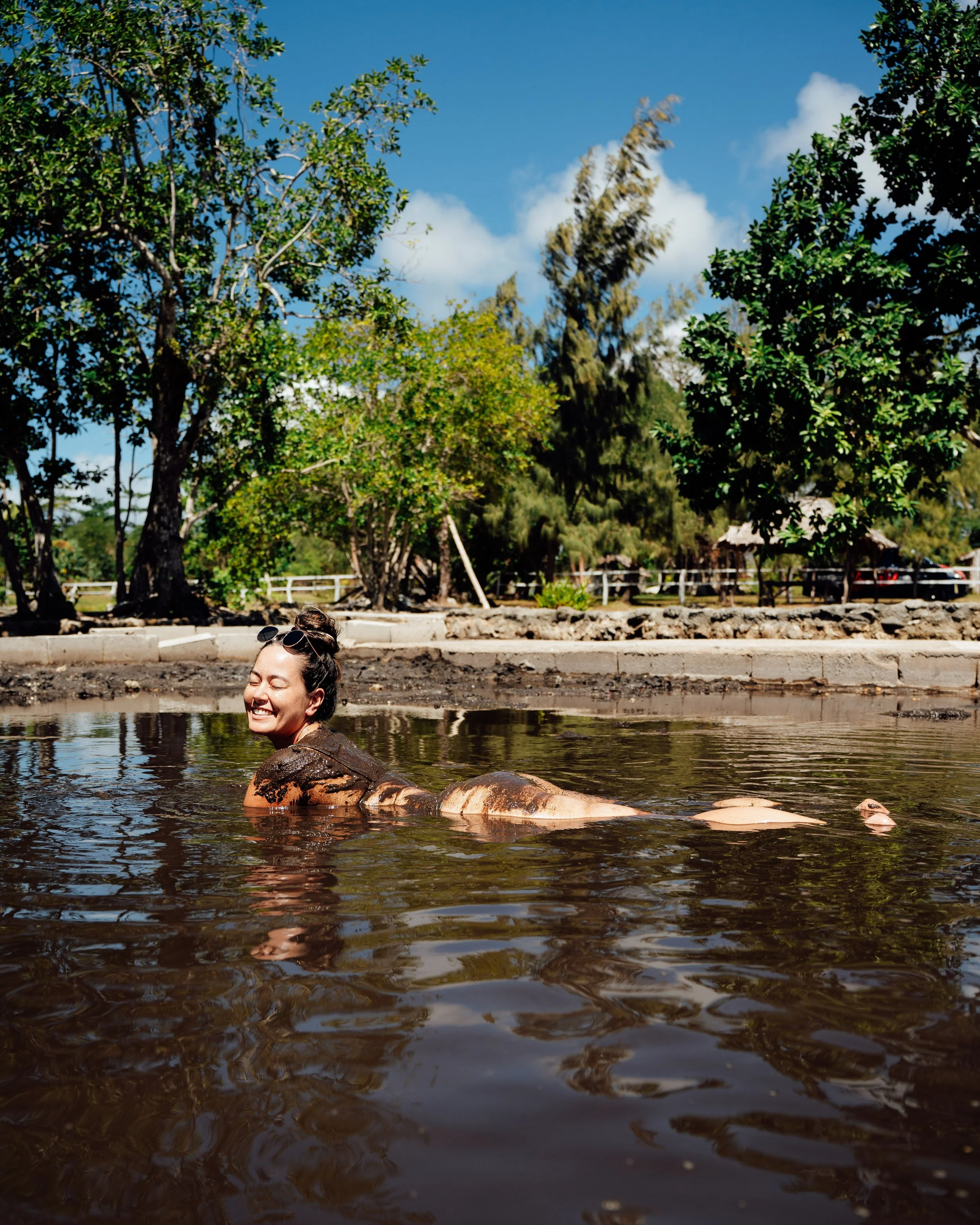
Our next stop was Nasinu Hot Springs, which includes both the hot springs and mud bath. To rinse off after there was a bucket for a makeshift shower and a changing area. It’s pretty basic but it’ll get you clean for your next stop!

We stopped for lunch at Gideons Landing Restaurant & Ecolodge because supposedly the TV show Survivor was filmed at the beach there. The beach was beautiful, but the food options weren’t great. I would probably recommend looking for a different restaurant nearby on Havannah Beach (Survivor Beach).

The last stop of the day was Hideaway Island, where you can snorkel and visit an Underwater Post Office. Drive to the point on the map closest to the island (I’ll also share a map with a pin) and park. There will be a small boat that goes back and forth taking people and you can take it across. Once on the island visit the visitor’s office where you can rent snorkeling gear and buy postcards for the Underwater Post Office. The postcards and stamps are waterproof, and they have special pencils to use. After you can snorkel out to a platform and dive down to an underwater mailbox and pop your postcards in. This was probably my favorite experience in Vanuatu!

day 3: ekasup cultural village

In the morning we went to the Ekasup Cultural Village to learn more about Vanuatu and their customs. I have to say, I was expecting it to be touristy but they did a great job at making it an authentic experience! You do have to contact them in advance to make a reservation.

They don’t have a direct website, but you can email them at: ekasupculturalvillage@vanuatu.com.vu

If you don’t want to rent a car but still want to explore the island, I found a few tours that cover these activities. This day trip covers the cultural village, Blue Lagoon, Nasinu Hot Springs, Survivor Beach, and trying the local kava.

If you also want to visit Hideaway Island, you can try this day tour here which also includes a coffee roastery visit.

SEARCH | Alternatively, check out Getyourguide.com for more options in the area.

Vanuatu Budget

FLIGHTS: $528 USD

The whole Fiji Airways loop (Vanuatu - Tonga - Samoa - Tuvalu - Fiji - Solomon Islands) cost $2072 USD, but to just break it down, from Brisbane to Vanuatu cost $312 USD and the flight from Vanuatu to Fiji cost $216 USD.

HOTEL: $35 USD

Our guesthouse cost $140 USD for two nights, but we split it four ways so it was $35 per person, or $17.50 per person per night.

RENTAL CAR: $54 USD (Total was $216 USD, split 4 ways)

FOOD & DRINKS: $73 USD

ACTIVITIES: $77 USD

$30 USD was for Hideaway Island alone (snorkeling, postcards, ferry fees)

$21 USD: Ekasup cultural village

$13 USD (1500 Vatu): Blue Lagoon

$13 USD (1500 Vatu): Nasinu Hot Springs

TOTAL SPENT FOR VANUATU: $767 USD

Everything you need to know about Kiribati

Everything you need to know about Kiribati

Kiribati is a dispersed island nation in the central Pacific Ocean, made up of 33 atolls and reef islands spread across a vast maritime area. Known for its vibrant Micronesian culture, subsistence fishing, and coconut-based economy, Kiribati faces urgent challenges from climate change and sea-level rise that threaten low-lying communities and freshwater supplies. The nation’s warm equatorial climate, rich marine biodiversity, and traditional island life offer a unique destination for travelers seeking remote beaches, diving, and cultural experiences.

If you’re here from my post “How to visit every country in the Pacific,” welcome! This is going to be a little more of an in-depth guide on my trip to the country of Kiribati.

How to get to Kiribati

As of now, there are four international flights per week from Fiji, Nauru, and the Marshall Islands to Bonriki International Airport on South Tarawa Island. We flew from Brisbane via Nauru Air and had a short layover in Nauru before reaching Kiribati — everyone had to deplane, go through security, and wait before getting back on the plane. There is no wi-fi at the airport so I recommend the Airalo Oceania Esim if you’re traveling to several countries in the Pacific, or if you’re just doing a layover in Nauru check out the esim here.

Where to stay in Kiribati

There aren’t many places to stay in Tarawa but we found that Dreamers Kiribati (not an affiliate link, but just trying to make it easier for your research!) was fantastic and in a great location to be able to explore the island. It is owned by a British guy that was born in Kiribati and spent his childhood here, left, and eventually came back in his later adult life. Fascinating story!

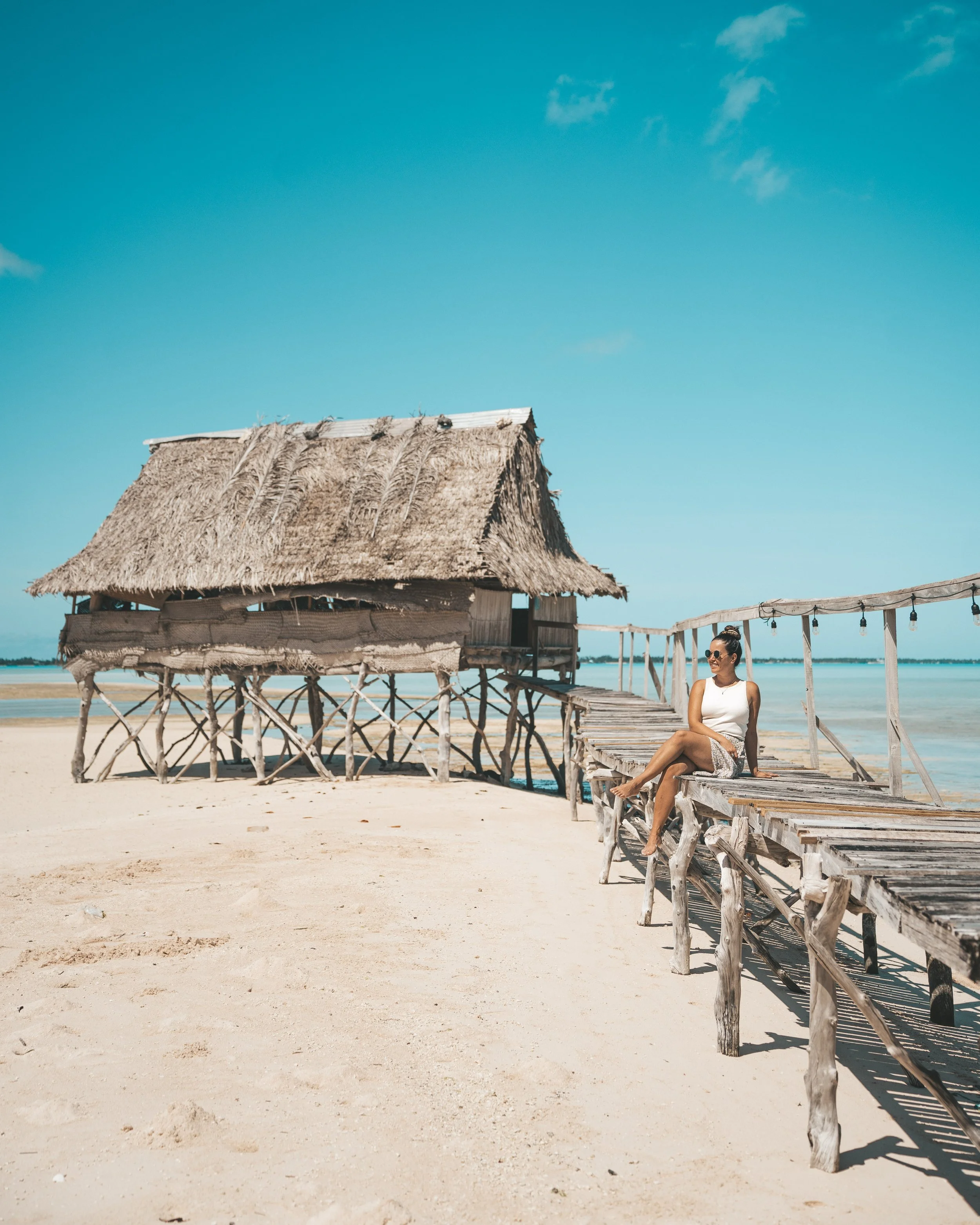
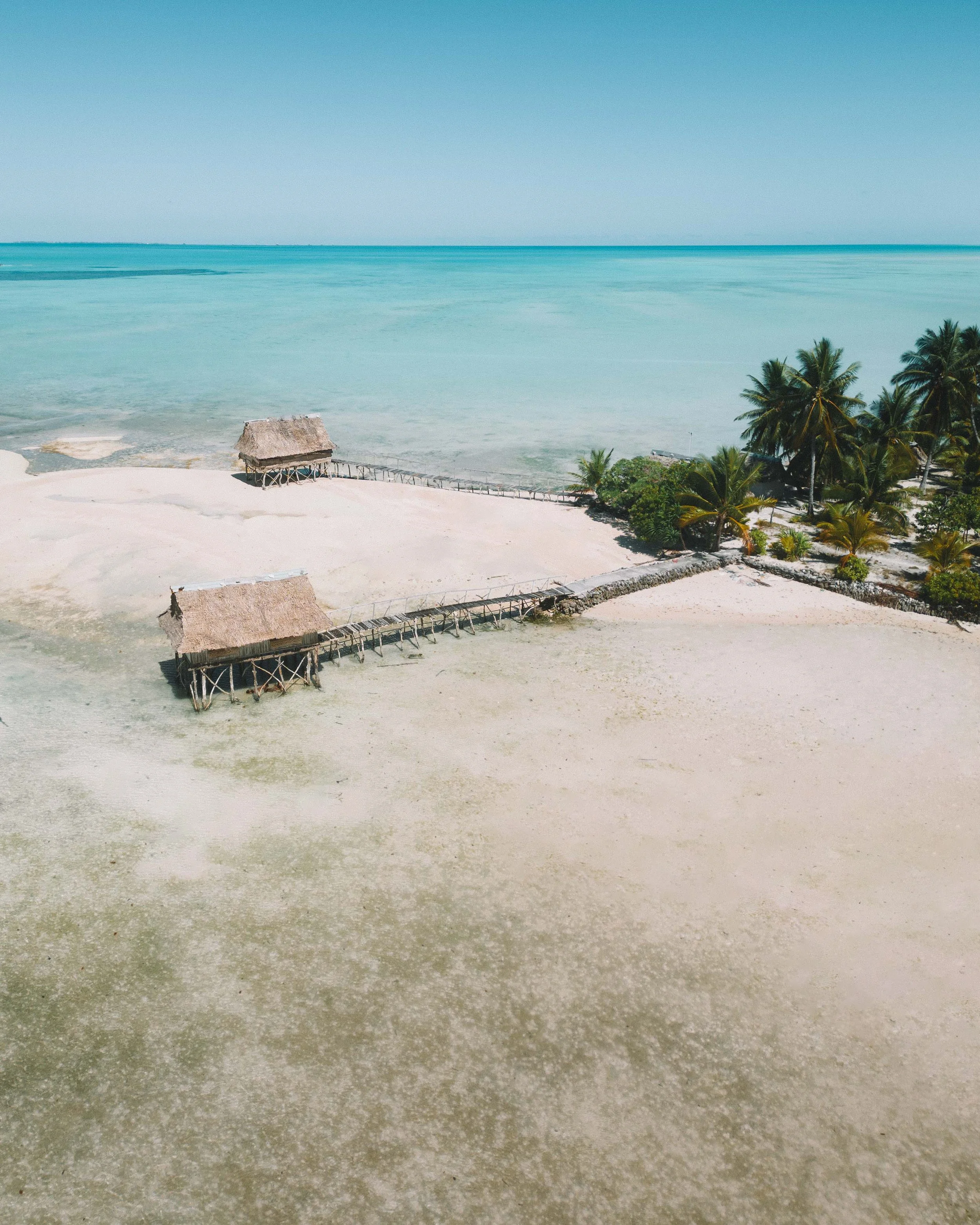
If you want to experience an authentic stay in a traditional overwater bungalow called a “buia” I recommend checking out Tabon te Keekee Ecolodge, but it’s pretty remote so I’d probably only recommend staying there for a night if you have an extended amount of days in Kiribati. We visited Tabon te Keekee Ecolodge on a day trip and it was perfect! I’ll get into it under the “things to do” section.

Staying connected in Kiribati

Unfortunately the Airalo Oceania Esim does not cover Kiribati, but there is a sim card stand right outside the airport when you arrive. Our flight got in at 7 AM and it was closed, so we didn’t get a sim card. We ended up just using the wi-fi at our hotel, Dreamers Kiribati, and it was surprisingly fast.

How to get around Kiribati

Airport pick-up and drop-off was included with Dreamers Kiribati, but to do some sightseeing there’s only one road that goes up and down the island. From the hotel on the main road we would wait and flag down minibuses that were going up and down the road. Depending on the direction you wanted to go, you need to stand on the right side of the road! Make sure you bring lots of Australian dollar coins since you’ll be paying a quarter here and there for a ride!

What to do in Kiribati

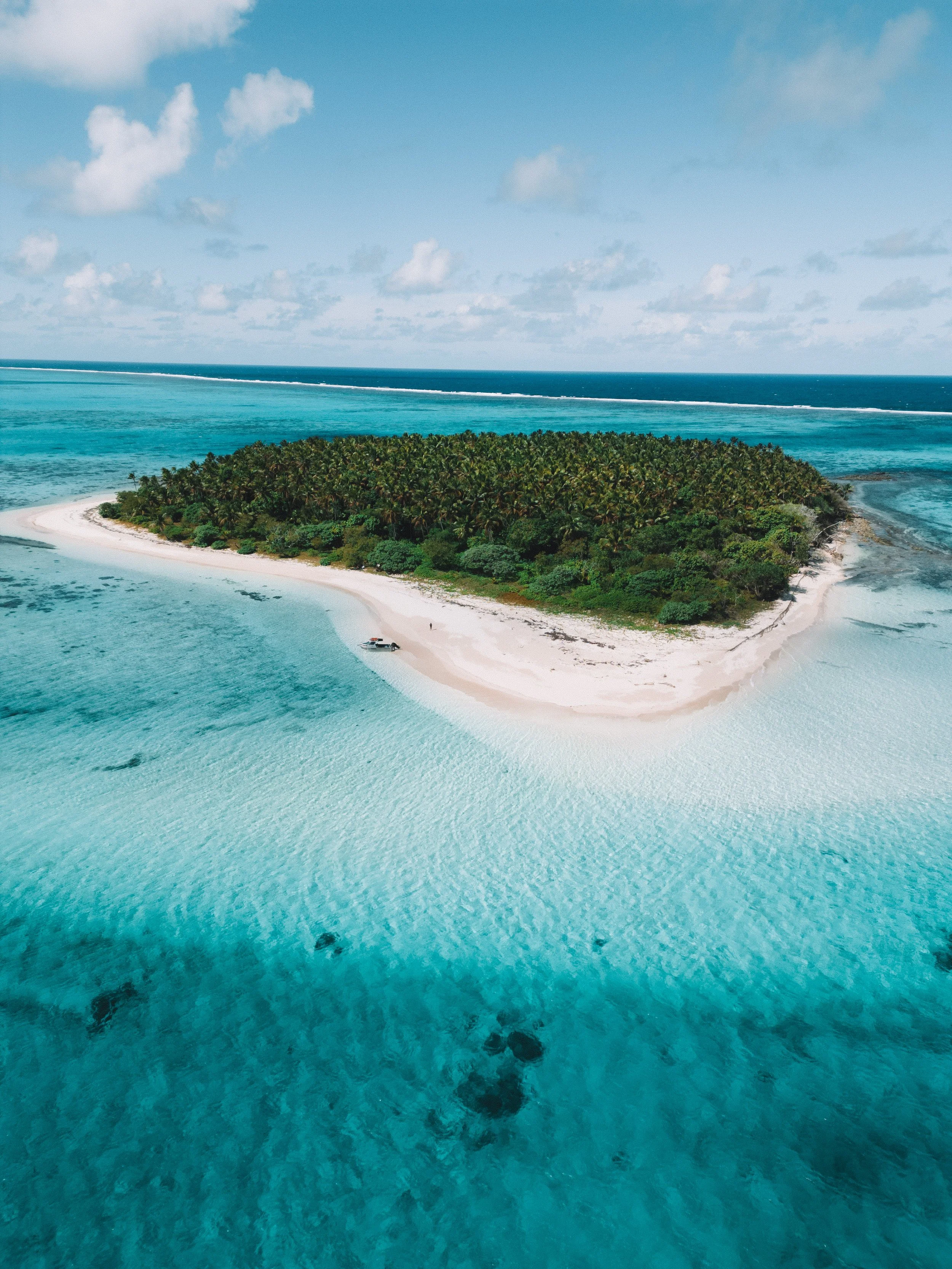
There’s not a whole lot to do, but we took the minibus up the island to check out some WWII relics. We also spent a morning going to Tabon te Keekee Ecolodge. From Dreamers Kiribati Hotel, we took a minibus towards the airport as far as we could. Then we hitchhiked a ride on a back of a truck until there was a bridge the truck could not cross. We walked for about another 20 minutes until we finally saw water and a boat going back and forth across the lagoon. We took the boat across and finally was at the ecolodge. We walked around the ecolodge a bit, I droned, and then we headed back.

Budget

FLIGHTS: $1146 USD

The whole Nauru flight loop (Brisbane - Kiribati - Nauru - Brisbane) cost $1784 USD, but to just break it down, from Brisbane to Kiribati cost $776 USD and the flight from Kiribati to Nauru cost $370 USD.

HOTEL: $40 USD

Normally a room at Dreamers Kiribati cost $140 AUD, but since there was three of us it was $180 AUD. Split three ways it was $60 AUD or $40 USD.

FOOD & DRINKS: $17 USD

Breakfast was included, we paid $20 AUD ($14 USD) for dinner at the guesthouse, and $3 USD for water/snacks. Minibus transport cost a few cents but make sure you bring coins or small change.

TOTAL SPENT FOR KIRIBATI: $1203 USD

Best Islands in the Bahamas

Best Islands in the Bahamas

Usually when you think of the Bahamas, you think of a tropical island with huge cruise ships docked in the harbor and tourists piled on the beaches. The Bahamas is comprised of more than 700 islands, and once you get out of the main islands like New Providence or Grand Bahama, remote beaches with powder white sand and crystal blue waters are everywhere. The following places are my favorite islands of the Bahamas!

Bimini

Bimini is the closest island to the US, and only a twenty minute flight away from Fort Lauderdale, Florida. A cheaper option is taking a high-speed ferry for two and a half hours from either Miami or Fort Lauderdale. 

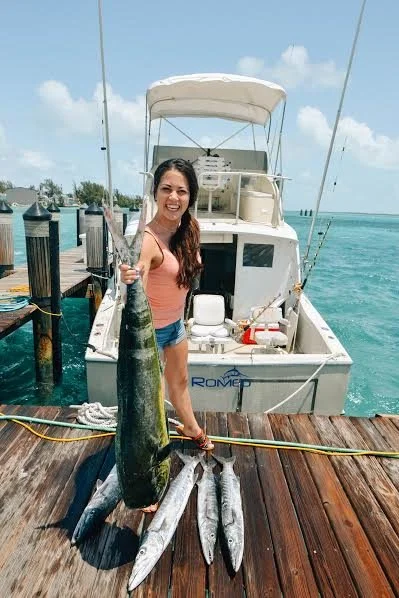
This island is also known as the "big game fishing capital of the world" and you can catch all sorts of fresh fish and have it cooked right in front of you. From scuba diving to dolphin tours, there's all sorts of water sports and activities for everyone!

Staniel Cay

With colorful cottages right on the water, freshly caught conch, friendly laid-back locals, and ocean teeming with sea life, Staniel Cay embodies everything about the Bahamas.

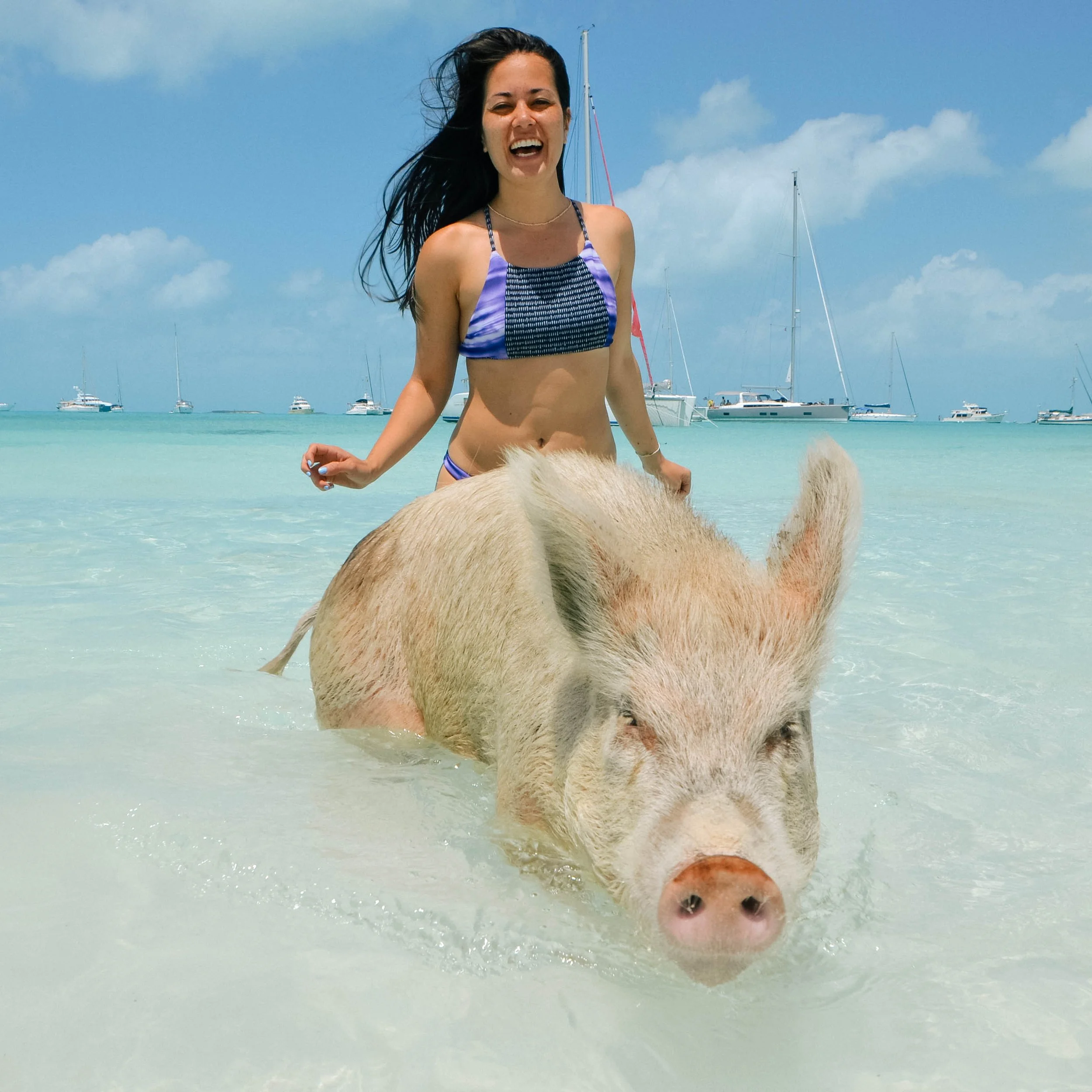
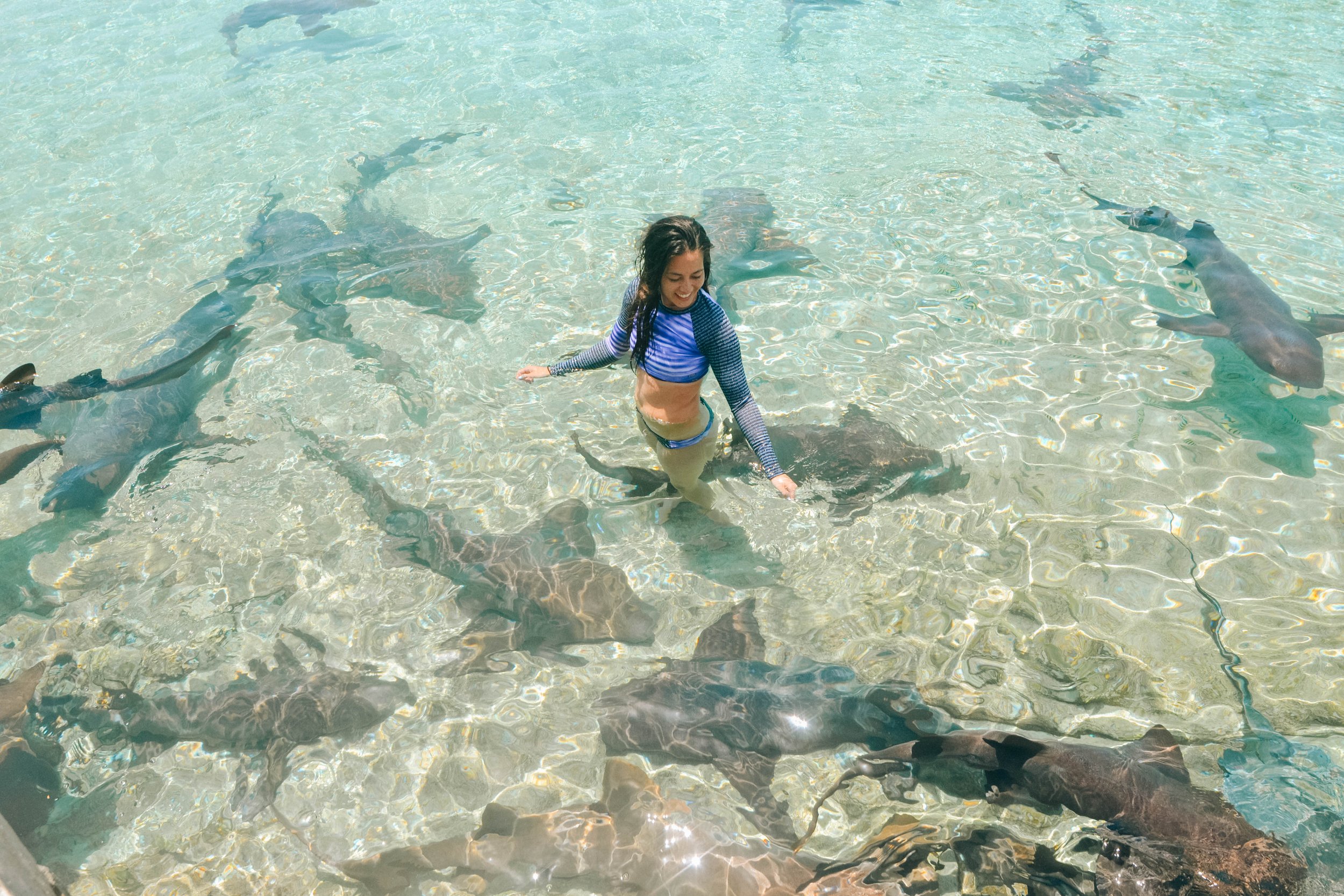
One of my favorite things to do is to have a boat day tour around the island and the guide takes you to all the sites including Iguana Cay to see endangered iguanas roaming the beach, snorkeling Thunderball Grotto as seen in the 1965 James Bond movie "Thunderball," swimming with nurse sharks at Compass Cay, and of course, the swimming pigs on Pig Island. 

Hope Town

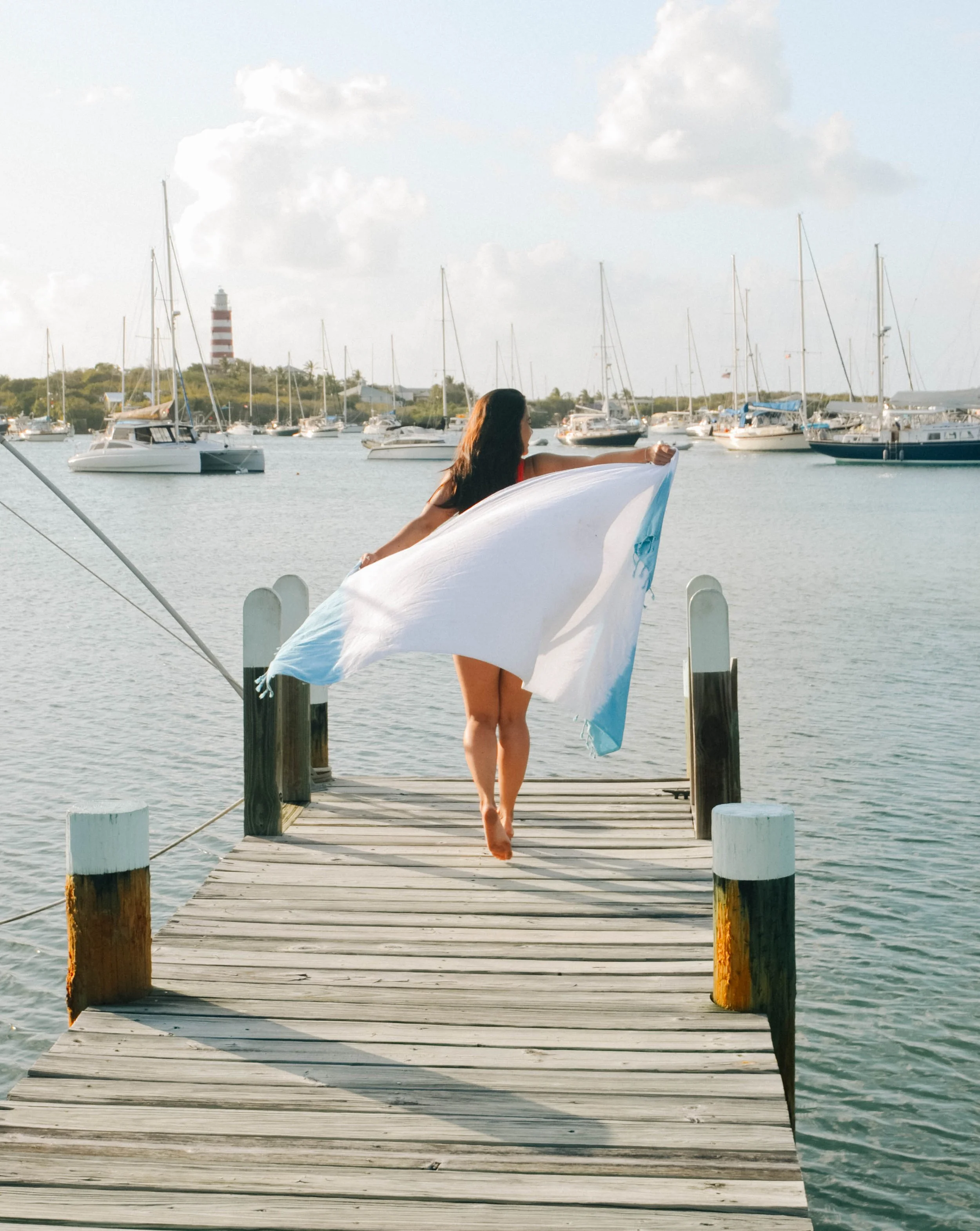
Hope Town is located in the chain of islands within the Abacos and is incredibly unique with a "New England meets the tropics" ambiance, very few tourists, and bicycling is the main method of transportation around the island.

This town has a rich history with houses and monuments dating back to post-American Revolution, where British loyalists took refuge after the war, and its architecture reflects that culture. It's also home to one of the last manual lighthouses in the world, and has a very iconic candy cane striped design.

Long Island

Close to the Turks & Caicos, Long Island is one of the most remote islands in the Bahamas, but it's an incredible mecca for divers. At Stella Maris Resort in the north they hold a "shark amphitheater" dive, where the dive masters are covered in chain mail and hand feed the sharks thirty feet below the surface. Towards the south is Dean's Blue Hole, which is the world's second deepest salt water blue hole, plunging to a depth of 663 feet and holds the world's international free diving competition each year. 


Harbour Island

Harbour Island, or Briland, as the locals call it, is home to some of the best beaches in the Bahamas, including the renowned Pink Sand Beach. Unfortunately if you look up photos of the pink sand, most of them are heavily edited to be bright pink, but the sand only has a very light pinkish hue. Regardless of the color, the sand feels like powder on your feet and the ocean is crystal blue!

Even though this island has a larger population of tourists, this island has amazing beaches, great restaurants, and some interesting wreck dives for scuba divers. Harbour Island definitely reflects not only the casual Bahamian attitude, but also more of a luxurious feel. 

The Bahamas is home to incredible islands outside of the cruise ship meccas and is much more than a "spring break college party escape." With beautiful white sandy beaches, clear ocean water, and laid-back friendly locals, it's a must-visit destination for all tropical island lovers.

Everything you need to know about Tuvalu

Tuvalu

Tuvalu is a tiny Pacific island nation of nine coral atolls and reef islands, home to about 11,000 people. Known for its clear lagoon waters, coconut palms, and traditional Polynesian culture, Tuvalu faces urgent threats from sea-level rise and climate change. The country maintains a close-knit community life, subsistence fishing and copra production, and a strong cultural identity expressed through dance, song, and customary practices. As one of the world’s smallest and most remote nations, Tuvalu plays a prominent role in global climate advocacy.

If you’re here from my post “How to visit every country in the Pacific,” welcome! This is going to be a little more of an in-depth guide on my trip to the country of Tuvalu.

How to get to Tuvalu

Tuvalu is one of the world’s least-visited countries, so getting here is not easy. There are about 3-4 flights per week, and they only fly from Fiji. The only airline that flies to Tuvalu is Fiji Airways. This was part of the “Fiji Airways loop” I mentioned in my other post, so we technically flew from Samoa and had a layover in Fiji before reaching Tuvalu.

Do you need a visa for Tuvalu?

It’s always best to do your own research, but even as a US passport holder I got mixed information looking on official websites. From my research, I concluded I would have to get a visa-on-arrival and have to pay $100 USD upon arrival, which I had ready, but the immigration officer just stamped my passport and that was it — no visa needed. Best advice I can give is to just be prepared!

Where to stay in Tuvalu

There aren’t many options for hotels in Tuvalu, and most of them are booked out half a year in advance for aid workers and construction workers for the airport runway. We were fortunate to book at the Funafuti Lagoon Hotel (not an affiliate link, just sharing to help), which is fifty meters from the airport. It’s nothing to brag about, but it’s clean and in a good location. There’s also a motorbike rental spot right across the street.

How to get around Tuvalu

Besides walking, we rented a motorbike directly across the street from our hotel. It’s just a house with a sign and a lot of motorcycles out front so you might have to wait until someone walks by. It was $10 USD for the day, including gas.

Staying connected in Tuvalu

My friends and I all used the Airalo Oceania Esim for our trip through the Pacific, but unfortunately it didn’t work for Tuvalu. There wasn’t wi-fi at the airport when we arrived either, so we had to ask around to find our hotel and just ended up using the hotel wi-fi during our time in Tuvalu.

SEARCH | Alternatively, check out Airalo.com for more esim options.

Currency in Tuvalu

Tuvalu uses the Australian dollar, but make sure you bring enough cash for your trip! ATMs don’t work (at least when I went) and credit cards are not accepted.

What to do in Tuvalu

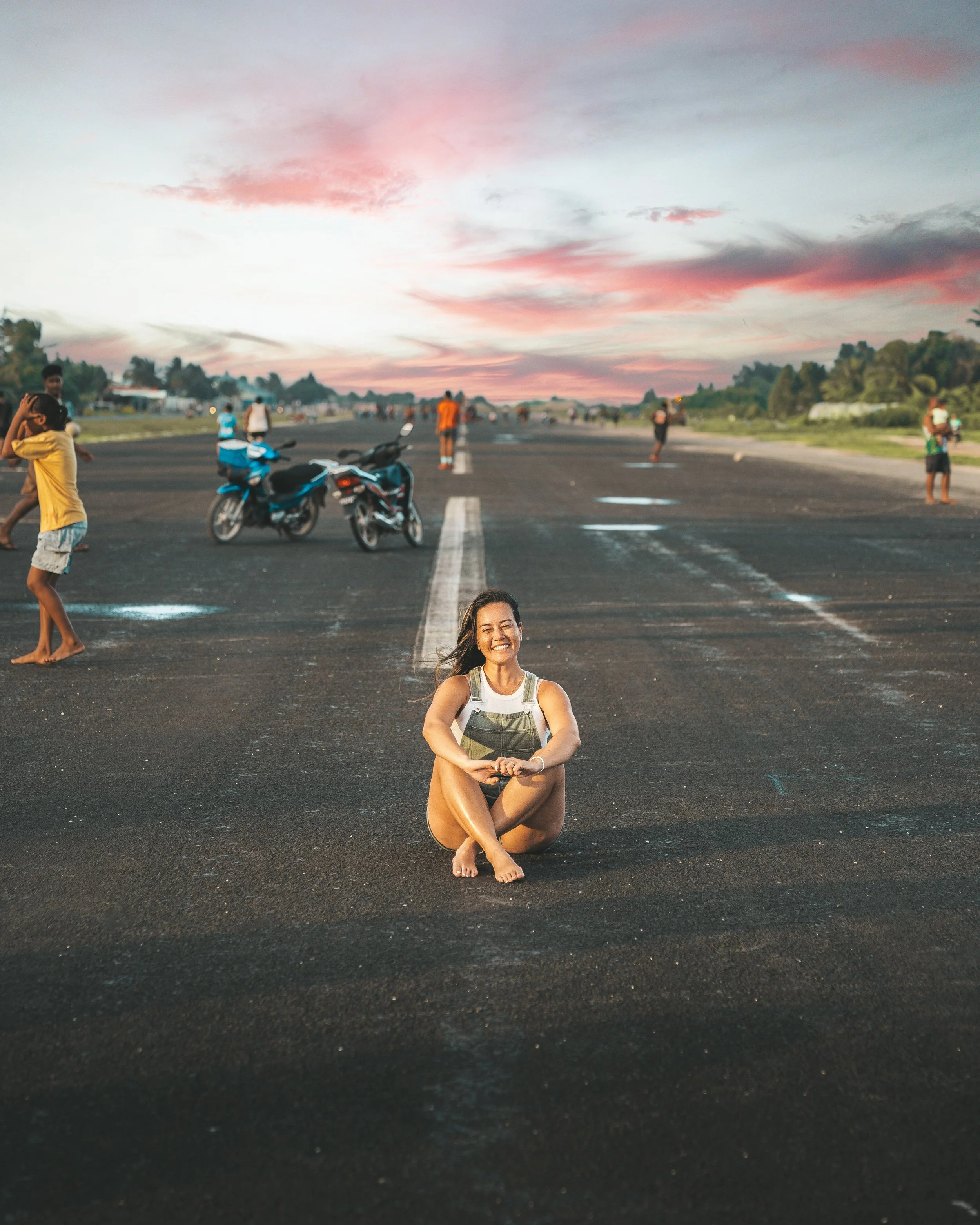
There isn’t a whole lot to do in Tuvalu since you can ride a motorbike from one end of the island to the other in twenty minutes, Beaches are also difficult to get to, surprisingly, considering how small and narrow the island is. I also recommend visiting the airport runway at sunset for a taste of local life — you’ll see the locals hanging out and playing football on the actual airport runway. Where else in the world can you do that?!

Budget

FLIGHTS: $651 USD

The whole Fiji Airways flight loop (Vanuatu - Tonga - Samoa - Tuvalu - Fiji - Solomon Islands) cost $2072 USD, but to just break it down, round trip from Fiji to Funafuti, Tuvalu and back to Fiji cost $651 USD.

HOTEL: $45 USD

MOTORBIKE RENTAL: $10 USD

FOOD & DRINKS: $10 USD

TOTAL SPENT FOR TUVALU: $716 USD

Everything you need to know about Nauru

Nauru

Nauru is a tiny Pacific island nation with a quiet, off-the-beaten-path charm. Visitors find rugged phosphate terraces, a dramatic coastal walk around the island’s rocky rim, and small local communities where traditional customs remain strong. Snorkeling and diving reveal healthy coral and marine life, while inland trails lead to World War II relics and limestone caves. With limited accommodation and services, Nauru suits travelers seeking solitude, cultural encounters, and an uncommercialized island experience. Practical planning and respect for local customs are essential.

If you’re here from my post “How to visit every country in the Pacific,” welcome! This is going to be a little more of an in-depth guide on my trip to the country of Nauru.

How to get to Nauru

Nauru is one of the world’s least-visited countries, so getting here is not easy. There are flights twice per week from Brisbane, which is where I started my journey, and the only airline that flies to Nauru is Nauru Airlines. I flew from Kiribati to Nauru, so I recommend looping these two countries together on your trip. Flights are regularly cancelled or rescheduled, so always leave extra days just in case something happens.

How to get the visa for Nauru

Surprisingly this isn’t an easy visa to get! At the time of writing this post, the main contact to obtain the visa is a man named Cramer Cain, who is based in Brisbane, Australia.

Here is his email: cramer.cain@brisbane.gov.nr

He will send you the visa application to fill out and you also have to provide a copy of your passport, flights, hotel booking, and a document that shows your current employment or source of income. Then you have to send a payment of $50 AUD.

I sent an email about a month prior to departure, but the visa wasn’t ready until the day I flew out of Brisbane. My friend’s visa was ready in just two days, so I naturally followed up weekly via email and was very concerned, but Cramer constantly said they were still working on it and not to worry since everything is fine. When I arrived in Brisbane I decided to pay a visit to the Nauru embassy and met Cramer, and he reiterated that he would follow-up with immigration, but again, everything was fine. I finally got my visa that evening and flew out just a few hours later to Kiribati. Definitely one of my more stressful visa experiences!

Where to stay in Nauru

There aren’t many options for hotels in Nauru, but we stayed at GoodWorks Accommodation. Ignore the photos you see on Booking, it was newly renovated when we went and was clean with great AC. Easy check-in and check-out system too. It was walking distance from two Chinese restaurants and overall a good location. Someone from the hotel was able to do an airport pick-up and drop-off for us.

SEARCH | Alternatively, check out Booking.com for more options in the area.

Staying connected in Nauru

My friends and I all used the Airalo Oceania Esim for this trip, which covers eight countries in Oceania and specifically seven of the countries on this trip through the South Pacific. It’s cheaper than buying individual esims or physical sim cards for each country so it’s a great deal and you can top-up if you run low on data. I personally love using esims since you’re instantly connected when you land to look up directions, currency rates, or language translations. Yes, Nauru is covered on the Airalo Oceania Esim, but if you’d rather purchase a Nauru esim separately you can check it out here.

SEARCH | Alternatively, check out Airalo.com for more esim options.

How to get around Nauru

We had the hotel pick us up from the airport and drop us off, and there were restaurants within walking distance. People are friendly enough that you could easily hitchhike, but if you wanted to rent a car I would recommend asking your hotel to set something up since there aren’t any formal car rentals on the island. GoodWorks Accommodation can set up a bicycle rental for $10 USD per day!

What to do in Nauru

DAY 1: The evening day we arrived, we got settled at our hotel and had dinner at one of the Chinese restaurants just a few minutes walk away. We tried both restaurants and they were terrible. I would’ve liked to try local food but we couldn’t find anything.

DAY 2: We woke up early and decided to walk the perimeter of the country. It’s 20 km around, and how often can you say you walked around an entire country?! We started at 6:30 AM and honestly that was way too late — it was already terribly hot by then. It took us a total of 3.5 hours with stops. Instead of walking, I would recommend renting a bike from GoodWorks Accommodation for $10 USD. It would be a quick, flat sunrise bike ride along the ocean.

During our walk, we stopped at Blue’s Gym to try and meet the “World’s Strongest Man of 2019,” powerlifter Jezza Uepa, but unfortunately he wasn’t there that day. Our next stop was the WWII Memorial Monument, where you can also see some of Nauru’s abandoned phospate sites. My friend also went to Moqua Cave, which is right next to the airport, but said there was a couple in there that was… very loud… to put it appropriately, so she didn’t go in.

After another terrible meal at the Chinese restaurant we headed back to the airport. It was a unique experience — would I ever go back? Probably not, but I thoroughly enjoyed my time in one of the smallest countries in the world.

Budget

VISA: $50 AUD

$50 AUD is about $35 USD.

FLIGHTS: $1009

The whole Nauru flight loop (Brisbane - Kiribati - Nauru - Brisbane) cost $1784 USD, but to just break it down, from Kiribati to Nauru cost $370 USD and from Nauru back to Brisbane cost $639 USD.

HOTEL: $80 USD

FOOD & DRINKS: $20 USD

TOTAL SPENT FOR NAURU: $1144 USD

Best Day Trip Itinerary for Padova

Padova (Padua) is a compact, lively city in northeastern Italy known for its rich history, striking medieval and Renaissance architecture, and vibrant student life. Highlights include the Scrovegni Chapel with Giotto’s groundbreaking frescoes, the ornate Basilica of Saint Anthony, and the atmospheric Prato della Valle — one of Europe’s largest squares. Narrow cobbled streets hide lively cafés, trattorie, and markets, while the city’s university, one of the world’s oldest, keeps the cultural scene youthful and intellectual. Easily explored on foot or by bike, Padova offers a rewarding mix of art, history, and everyday Italian charm.

I moved to Padova about a year and a half ago and wanted to put together a little guide of everything I do when friends come to visit. Most people skip Padova due to the proximity of Venice, but if you’ve found that you booked too many days in Venice but don’t have enough time to go to the Dolomites, I recommend hopping on a train and spending the day in this beautiful city.

Where to Stay in Padova

If you’re looking to stay a night in Padova rather than just a day trip, it’s actually much cheaper than Venice! For my budget-friendly friends, there’s a brand new hostel that just opened up in the heart of downtown Padova, Hotello Padova.

STAY | Alternatively, check out Hostelworld.com for more options in the area.

Grab a mint cappuccino at caffe pedrocchi

Caffè Pedrocchi in Padua is an iconic 19th-century coffeehouse known for its elegant neoclassical façade, historic interiors, and cultural significance as a meeting place for intellectuals and students. Opened in 1831, it blends café, pasticceria, and museum elements, offering traditional Italian coffee, pastries, and a glimpse into Padua’s social and political history. Its distinctive "green room" remains a symbol of literary and academic gatherings, making Caffè Pedrocchi a must-visit for anyone exploring the city.

Start your morning visiting Caffe Pedrocchi and grabbing the iconic mint cappuccino (cafe di Pedrocchi) and a slice of mint cake. You won’t find this anywhere else!

Tour University of padova and Giotto’s scrovegni chapel

Founded in 1222, the University of Padova is one of the world’s oldest and most prestigious universities, renowned for its long tradition of academic freedom and interdisciplinary scholarship. It became a center of scientific innovation in the Renaissance, attracting scholars and promoting empirical inquiry. The university’s most famous association is with Galileo Galilei, who lectured there from 1592 to 1610. While at Padova, Galileo made pivotal advances in physics, astronomy, and the study of motion, including improvements to the telescope and observations that challenged prevailing Aristotelian views. His work at Padova helped lay the foundations of modern science and cemented the city’s place in intellectual history.

After having an Italian breakfast at Caffe Pedrocchi, head over for a tour at University of Padova, the second oldest university in the world, to see where Galileo taught. If you want to skip the tour, you can check out the historic Palazzo del Bo courtyard, for free.

I also recommend checking out Giotto’s Scrovegni Chapel, a masterpiece of early Renaissance art. Built and frescoed around 1305, the chapel’s luminous cycle depicts the life of the Virgin and Christ with emotional clarity, dramatic composition, and pioneering use of naturalism. Giotto’s bold figures, expressive faces, and skillful use of space mark a decisive shift from medieval styles, making the chapel a cornerstone in the development of Western painting. The intimate, richly colored interiors remain one of Italy’s most important and moving artistic experiences.

TOUR | Alternatively, check out Getyourguide.com for more tour options in the area.

try the typical octopus in piazza della erbe

After your tour, head over to Piazza della Erbe and Piazza del Frutti to browse the local markets. In Piazza della Erbe you’ll see a little stand called a “folperia,” which in Venetian dialect translates to “octopus stand.” Polpo means octopus in Italian, and folpo is octopus in Venetian dialect. Seafood is always a must since we’re so close to the Adriatic Sea and this stand is very popular!

Basilica di san Antonio

The Basilica di Sant’Antonio in Padua is a major Roman Catholic pilgrimage site built in the 13th century to honor Saint Anthony of Padua. A striking mix of Romanesque, Byzantine and Gothic styles, the basilica houses richly decorated chapels, the saint’s silver-reliquary tomb, and notable artworks by Donatello and other Renaissance artists. Its domes and rose-colored stone dominate Padua’s skyline, while its religious and cultural significance draws visitors year-round for worship, art, and history.

After visiting the piazza, you can either walk or hop on a tram towards Prato della Valle. The Basilica is a must in Padova, as it is the second most popular Catholic pilgrimage site after the Vatican. Saint Anthony’s physical tongue is also on display, but you can read more about that when you visit.

grab to-go pasta and walk around prato della valle

Prato della Valle in Padua is one of Europe’s largest public squares, shaped as an elliptical island surrounded by a wide canal and lined with 78 statues of notable figures. Once a swampy area, it was transformed in the 18th century into a landscaped promenade and market space. Today it remains a popular spot for locals and visitors, hosting events, markets, and leisurely strolls amid historic architecture and green lawns.

After visiting the basilica, walk over to Prato della Valle and grab to-go pasta at Bepe Bigoi — they have fresh handmade pasta and it’s perfect to take it over and have a little picnic in the grass while enjoying the views. During the summer you’ll see locals having picnics all over! I recommend the “Bigoli alla anatra,” which is the specialty pasta in Padova.

Aperitivo in the piazza dei signori

Wander the streets as you make your way back up to the Piazza dei Signori to see the clock tower — La Torre dell'Orologio. La Torre dell'Orologio in Padova is a compact, elegant clock tower dating to the 14th century that anchors the lively Piazza dei Signori. Its striking astronomical clock, restored over centuries, displays hours, lunar phases, and zodiac signs—an enduring symbol of medieval civic pride and scientific curiosity. Visitors appreciate the tower’s textured brickwork, the historic bell that marks the hours, and its setting amid cafes and arcades, making it a quiet but memorable stop on a stroll through Padua’s historic center.

Around 4 PM is time for aperitivo, and I recommend grabbing cicchetti and spritz at Brutal. It does get crowded so the earlier the better, but it’s the best to try the typical cicchetti — you can’t go wrong with anything seafood if you don’t know which to try. Padova is also home of the aperol spritz, where it was invented in 1919 and introduced at the International Trade Fair of Padova by the Barbieri brothers. A local secret is to try the “spritz misto,” which is half aperol, half campari — don’t ask for this in any other parts of Italy because they’ll look at you like you’re crazy!

sunset at exforo

If you’re looking for another spot for aperitivo or prefer to stay closer to Prato della Valle, I recommend the spot Exforo, which is beautiful to catch the sunset while overlooking all of Prato della Valle. I’m a huge fan of rooftop bars at sunset and this one is hard to beat.

Best gelato in padova

And lastly, if you’re looking to top-off your day with gelato, the best gelato is near Prato della Valle at Gelateria Portogallo. The line is always crazy long though, so if you’re near Piazza dei Signori I would recommend Gelateria da Bepi Padova Centro. My personal favorite in Padova is Gelateria La Romana dal 1947, but it’s not near downtown so I’m not including it as “the best,” although that’s where I prefer to take my friends since it has a nice sit-down area.

Summer nightlife in padova

For four months of the year from spring to summer, Navigli Padova opens up along the canal and you can find tons of bars from 5 PM - 2 AM. Radio stations will have their DJs playing and you can walk along the canal while enjoying drinks if you’re looking for something to do later in the evening after dinner.