Everything you need to know about Kiribati
Kiribati is a dispersed island nation in the central Pacific Ocean, made up of 33 atolls and reef islands spread across a vast maritime area. Known for its vibrant Micronesian culture, subsistence fishing, and coconut-based economy, Kiribati faces urgent challenges from climate change and sea-level rise that threaten low-lying communities and freshwater supplies. The nation’s warm equatorial climate, rich marine biodiversity, and traditional island life offer a unique destination for travelers seeking remote beaches, diving, and cultural experiences.
If you’re here from my post “How to visit every country in the Pacific,” welcome! This is going to be a little more of an in-depth guide on my trip to the country of Kiribati.
How to get to Kiribati
As of now, there are four international flights per week from Fiji, Nauru, and the Marshall Islands to Bonriki International Airport on South Tarawa Island. We flew from Brisbane via Nauru Air and had a short layover in Nauru before reaching Kiribati — everyone had to deplane, go through security, and wait before getting back on the plane. There is no wi-fi at the airport so I recommend the Airalo Oceania Esim if you’re traveling to several countries in the Pacific, or if you’re just doing a layover in Nauru check out the esim here.
Where to stay in Kiribati
There aren’t many places to stay in Tarawa but we found that Dreamers Kiribati (not an affiliate link, but just trying to make it easier for your research!) was fantastic and in a great location to be able to explore the island. It is owned by a British guy that was born in Kiribati and spent his childhood here, left, and eventually came back in his later adult life. Fascinating story!
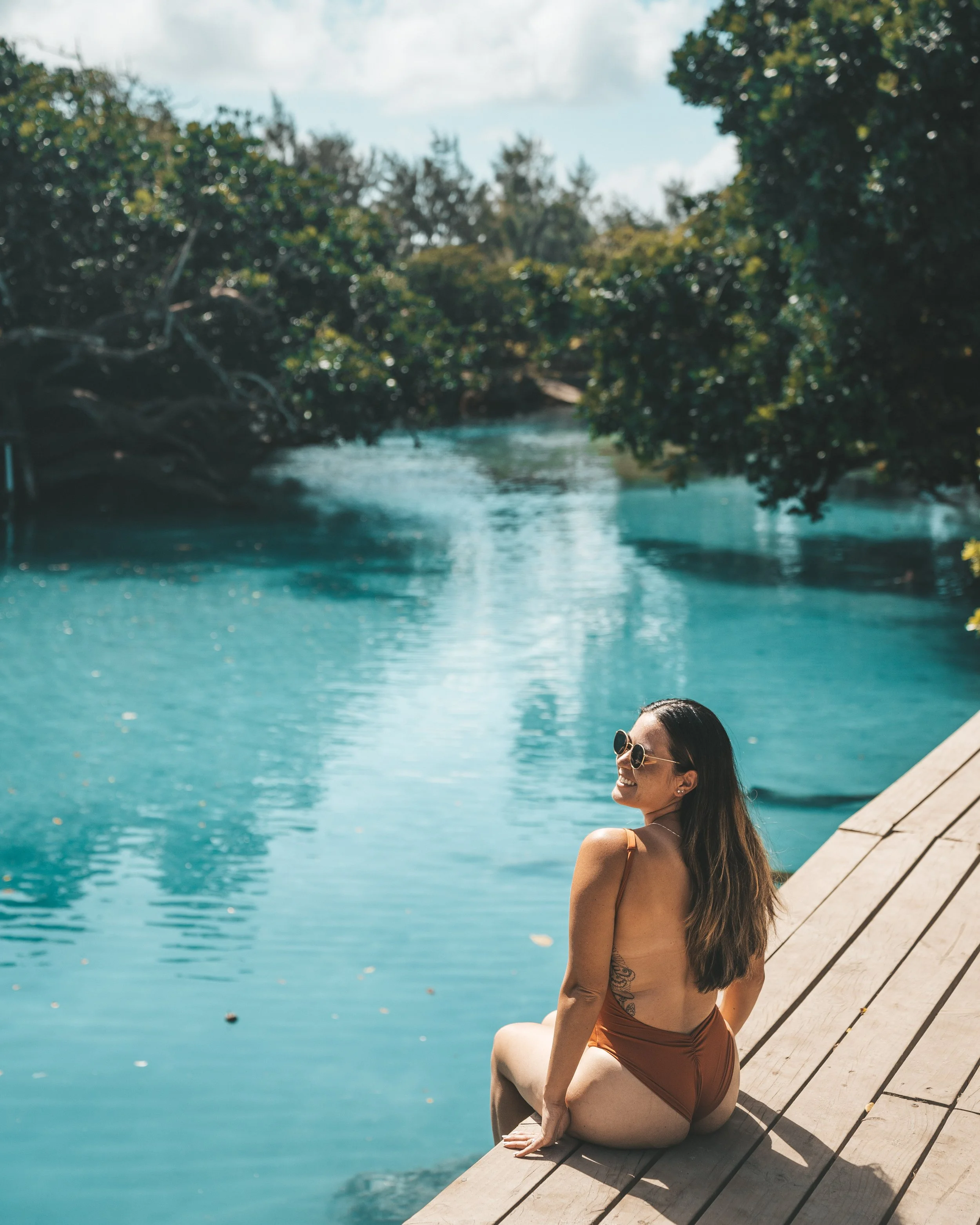
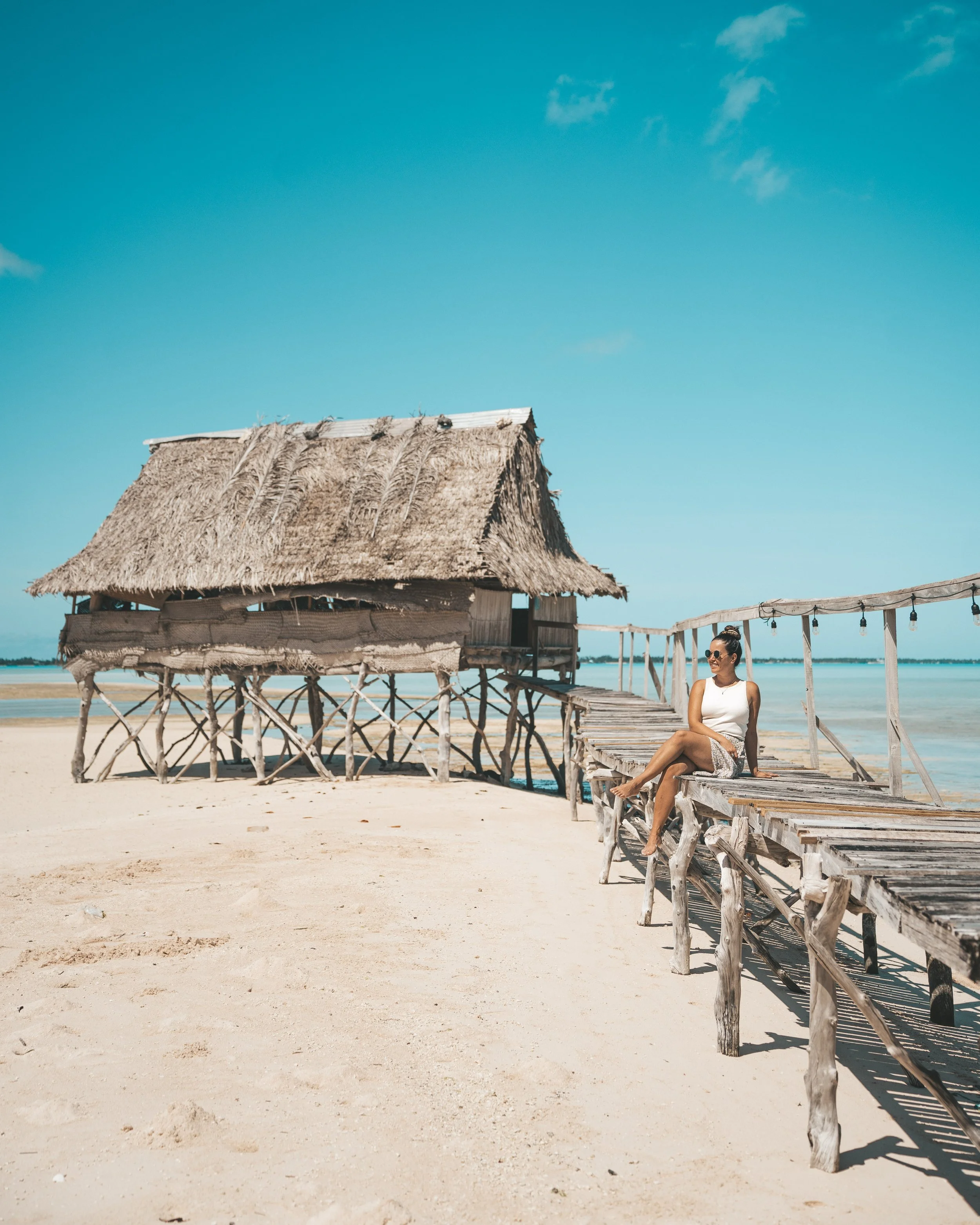
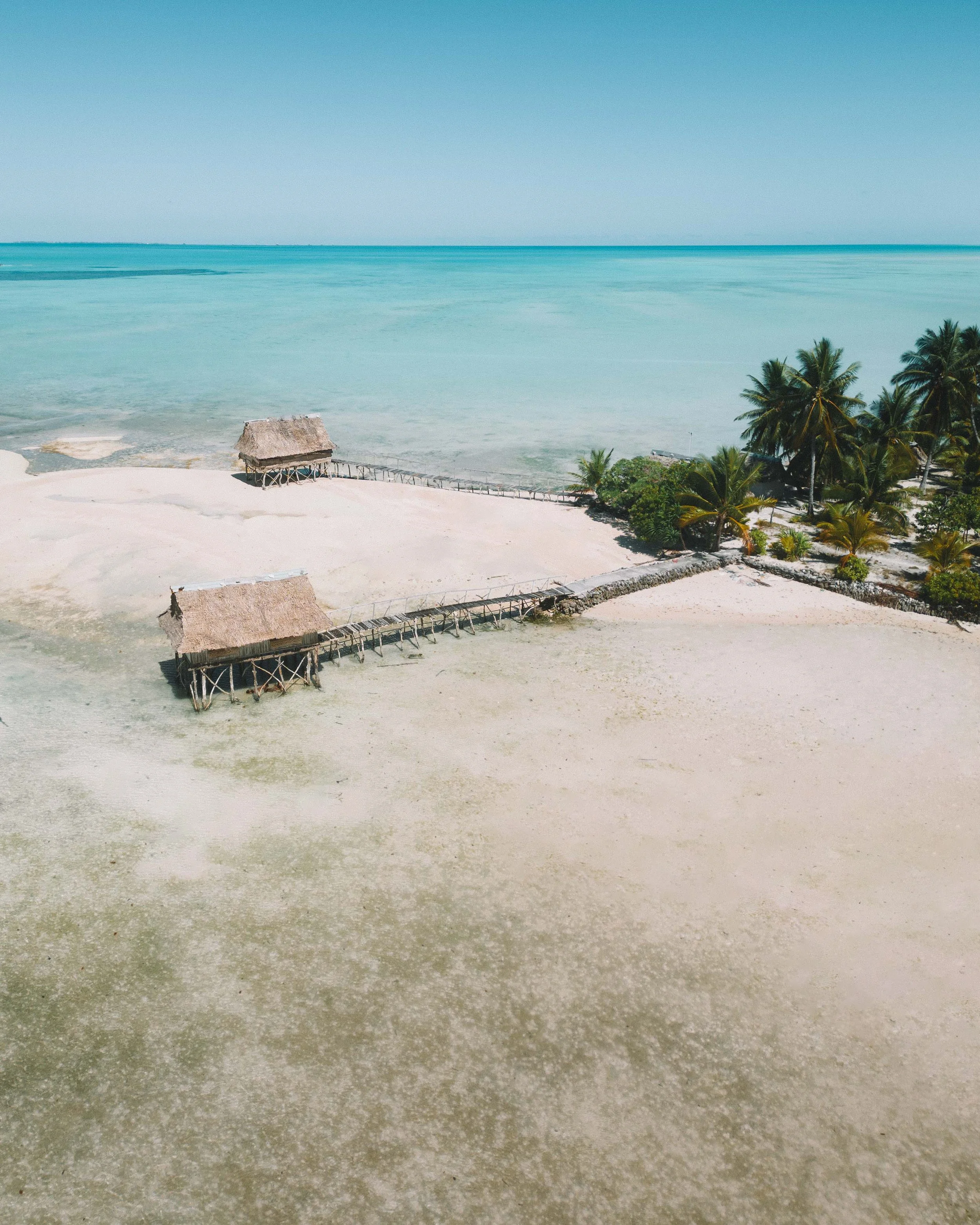
If you want to experience an authentic stay in a traditional overwater bungalow called a “buia” I recommend checking out Tabon te Keekee Ecolodge, but it’s pretty remote so I’d probably only recommend staying there for a night if you have an extended amount of days in Kiribati. We visited Tabon te Keekee Ecolodge on a day trip and it was perfect! I’ll get into it under the “things to do” section.
Staying connected in Kiribati
Unfortunately the Airalo Oceania Esim does not cover Kiribati, but there is a sim card stand right outside the airport when you arrive. Our flight got in at 7 AM and it was closed, so we didn’t get a sim card. We ended up just using the wi-fi at our hotel, Dreamers Kiribati, and it was surprisingly fast.
How to get around Kiribati
Airport pick-up and drop-off was included with Dreamers Kiribati, but to do some sightseeing there’s only one road that goes up and down the island. From the hotel on the main road we would wait and flag down minibuses that were going up and down the road. Depending on the direction you wanted to go, you need to stand on the right side of the road! Make sure you bring lots of Australian dollar coins since you’ll be paying a quarter here and there for a ride!
What to do in Kiribati
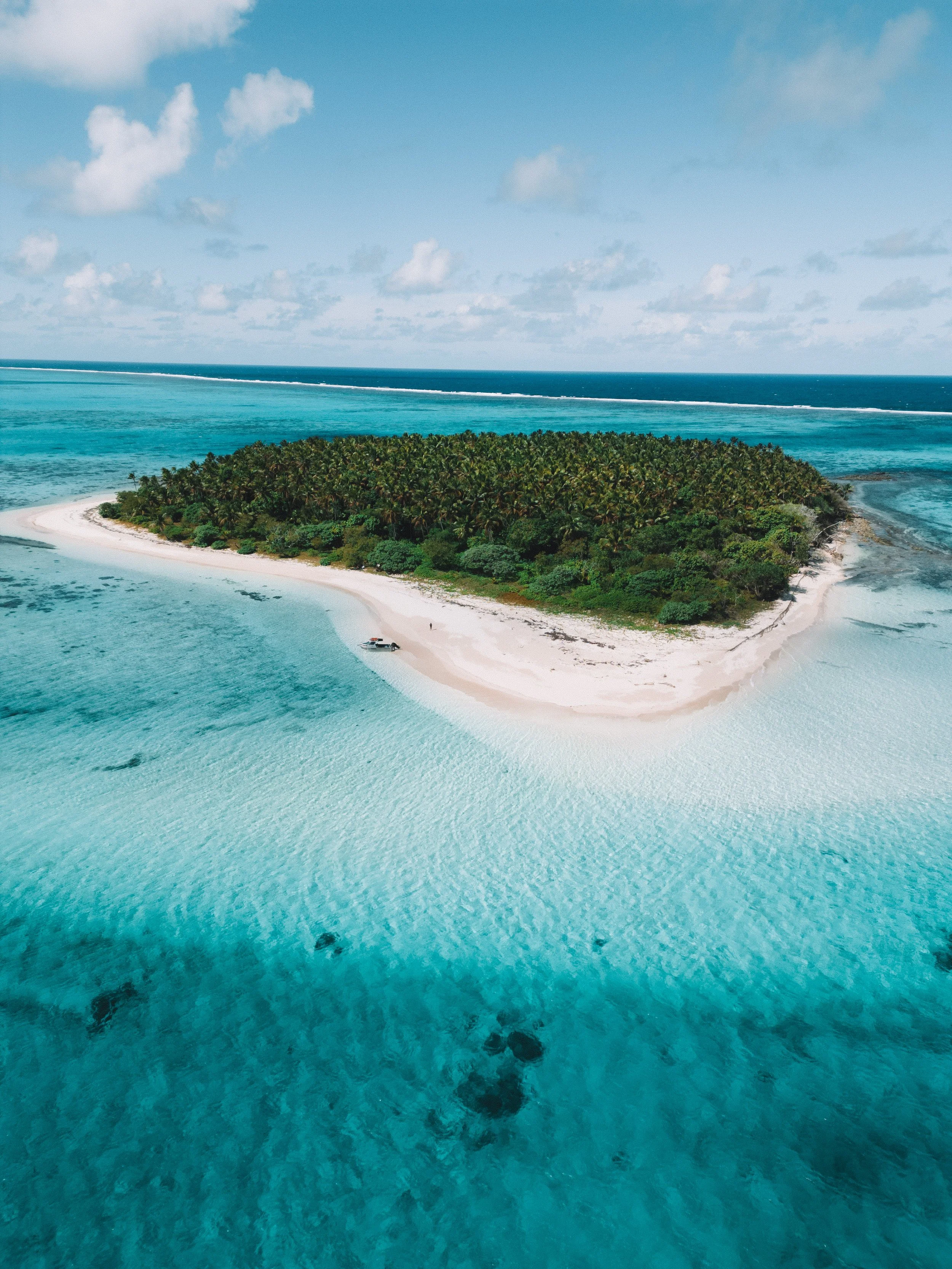
There’s not a whole lot to do, but we took the minibus up the island to check out some WWII relics. We also spent a morning going to Tabon te Keekee Ecolodge. From Dreamers Kiribati Hotel, we took a minibus towards the airport as far as we could. Then we hitchhiked a ride on a back of a truck until there was a bridge the truck could not cross. We walked for about another 20 minutes until we finally saw water and a boat going back and forth across the lagoon. We took the boat across and finally was at the ecolodge. We walked around the ecolodge a bit, I droned, and then we headed back.
Budget
FLIGHTS: $1146 USD
The whole Nauru flight loop (Brisbane - Kiribati - Nauru - Brisbane) cost $1784 USD, but to just break it down, from Brisbane to Kiribati cost $776 USD and the flight from Kiribati to Nauru cost $370 USD.
HOTEL: $40 USD
Normally a room at Dreamers Kiribati cost $140 AUD, but since there was three of us it was $180 AUD. Split three ways it was $60 AUD or $40 USD.
FOOD & DRINKS: $17 USD
Breakfast was included, we paid $20 AUD ($14 USD) for dinner at the guesthouse, and $3 USD for water/snacks. Minibus transport cost a few cents but make sure you bring coins or small change.
TOTAL SPENT FOR KIRIBATI: $1203 USD